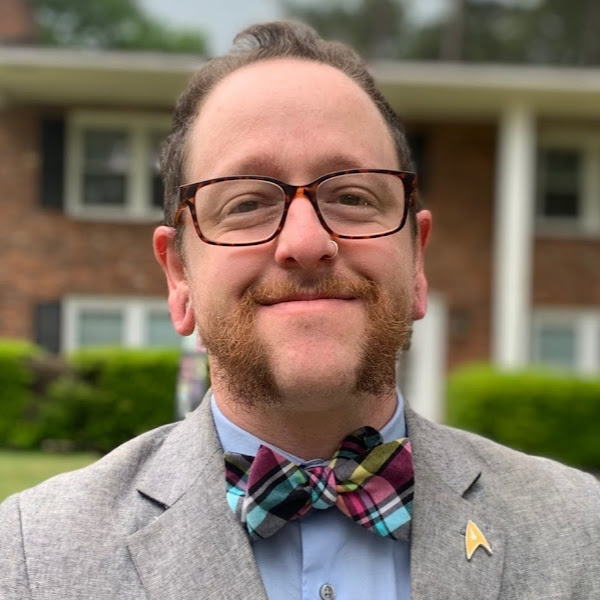
[00:00:01] Speaker A: Welcome to the Truth Exchange podcast. This is the unique program where we have conversations about worldview all through the lens of oneism and two ism. This lens is based on Romans 1:25. We have exchanged the truth of God for the lie, worship and serve creation rather than the Creator who is blessed forevermore. Amen. I'm your host, Joshua Gilo with co host Mary Weller. And our guest today is Bishop Eric Meniz. Now he currently serves as the fifth bishop of the Anglican Diocese of San Joaquin. A longtime friend of the ministry has spoken at a number of our think tanks. He was also a featured speaker at our think tank, Shining as Lights, Telling the Truth in a Pagan Utopia.
This conversation we began recording without really any kind of formal introduction. So that's why I'm doing this post recording. And like long time and old time friends do when we get together after having not seen each other in a number of years, we just get to chatting and then before we realize that, oh, we need to get onto the program. So that's where this conversation picks up, is about midway through realizing, oh, we need to get on with the focus of the content. We pray that this episode will bless you, encourage you, help you think through the issues of the day through the lens of oneism and two ism.
[00:01:21] Speaker B: Does that work?
[00:01:22] Speaker C: Works for me. I guess we'll see. All right.
I've got a face made for radio to be sure.
[00:01:32] Speaker B: Mike Law makes that joke too. That's super funny.
[00:01:38] Speaker C: Well, he, he really was on radio.
[00:01:41] Speaker B: Yeah.
Before, before I knew my husband, he used to listen to Mike and he was. Bob was so excited about something Mike was talking about one time that he drove all the way to the studio to meet him. He didn't know that people didn't just show up at studios and Mike was a little concerned that like this wild eyed guy had shown up, but Bob was a fan, so.
[00:02:05] Speaker C: Oh, that's good.
Yeah, yeah, he's still doing very well. Thanks, Petigod.
[00:02:12] Speaker B: That's wonderful. We had.
Oh, go ahead.
[00:02:17] Speaker C: We keep in touch, he and I.
[00:02:19] Speaker B: Good. How often do you speak to him?
[00:02:21] Speaker C: Probably four or five times a year.
Okay, so he retired.
I don't know if you know, he came up to my diocese, became an Anglican priest and so that's been really good.
[00:02:37] Speaker A: Is he still serving the parish up in, in Idaho?
[00:02:41] Speaker C: He is, he is. He, he will preach, I think he said once a month or so.
He's still, he still preaches and he is. I mean, I don't know if you guys ever heard him preach, but he is a good preacher.
[00:02:57] Speaker B: Yeah.
[00:02:58] Speaker C: His. His Bible exposition is just top drawer.
[00:03:04] Speaker B: Yeah, yeah. That's wonderful. We used to call him the pastor of Truth Exchange Exchange because he would.
We often had him do, especially at think tanks, like the opening devotions, the opening. Opening homilies for the think tanks, because he is such a good preacher. And we just. We needed that word, especially with the. The things that we deal with, you know, at Truth Exchange. It was so important before we kind of had to press our faces into these awful things that we were contending with to hear him preach the gospel. And so.
[00:03:37] Speaker C: Yeah, yeah, yeah. So I'll tell them that you say hi.
[00:03:39] Speaker B: Please do. Please.
[00:03:41] Speaker A: We just actually had him on.
[00:03:43] Speaker C: You just had him on?
[00:03:44] Speaker A: We just had him on. Yes. And that was lovely because I had not spoken to him in a number of years, so that it was a very. It was a very sweet time together. Thank you for. For agreeing to being on the podcast. One of the things that Mary and I have been laboring to do is to really reconnect with a lot of our dear friends and really find out, you know, what ministry looks like on ground level for them. And so we're just really delighted that you were able to spend some time with us today.
[00:04:15] Speaker C: Yeah, well, happy to do so.
[00:04:17] Speaker B: Thank you so much. I know that you had expressed feeling a little nervous about it, that you weren't going to be articulate, and yet, as I had mentioned in my email to you, and something that I'm hoping that we can talk to our audience about today is what we're finding is we have so many people who have found. Found Truth Exchange, say, since like 2020, and they had never heard of Peter Jones before. They'd never heard of one ISM and two ISM four.
And they're just starting to wrap their hands around what we now term woke.
But they don't understand what happened in the church. They don't understand how all of these things crept in and how they've taken over.
And Joshua and I remember so vividly you describing what your experiences were in the Episcopalian Church before. Before acne even existed.
And then, you know, so we. We'd like to almost go back that far. We'd like people to understand what some of those schisms were about, some of the experiences that you described. I remember you describing ministering, I think it was in Hollywood or in Los Angeles, and. And really starting to realize the theological drift and its implications as far as homosexuality was concerned.
[00:05:30] Speaker C: Yeah.
[00:05:32] Speaker B: And then we'd like to talk to you about some of the current day things that are going on as well.
[00:05:35] Speaker C: Sure.
Just as a side note, I don't know. Have you kept up with Bishop James Wong? So Bishop Wong, he attended at least three of the, of the gatherings in Escondido that I was at.
He became Archbishop of the Indian Ocean and he would come with Dave somebody from South Africa.
He's in my, he's in my contact somewhere. But I've run into Bishop Wong now Archbishop Wong in, in Jerusalem and he and I gave a talk at, at the Global Anglican Futures Conference.
Just an amazing guy who has labored for the truth.
He would be terrific to be on your podcast.
I mean, obviously he's in either the Seychelles or Marisha. I think he lives in the Seychelles. But, but what a, what a. Just a terrific guy who really worked on the global scale.
Yeah, I'm on the, you know, sort of like fringe of international stuff, but he, he really worked on, so he, he had been on the, the GAFCON Primates Council and really did a lot of stuff.
He's. He'd be a great guy to have on and super articulate.
[00:07:03] Speaker B: That would be wonderful. Thank you for that. Sounds like that name.
[00:07:07] Speaker A: Yeah. In preparation for, for this time together, Bishop Meniz is that. I. I was, I was re. Listening to one year lecture from 2014, the Shining as Lights on Twoism and the Doctrine of Scripture. But I also went back and I.
[00:07:26] Speaker D: Listened to a number or actually a.
[00:07:28] Speaker A: Recent video of yours on your testimony, which is a very, very sweet and powerful story about Christ work in your life as a young man.
And it's interesting because you came in, you grew up Methodist, if I recall correctly.
[00:07:49] Speaker C: Well, well, kind of my family would have said we were Methodist, but we never ever went to church. I didn't know we were Methodist until I was baptized in Episcopalian. My mom said, but we're Methodists.
[00:08:02] Speaker A: And how you recounted going in because of your now wife, Florence.
[00:08:09] Speaker C: Oh, no, no, no.
[00:08:11] Speaker D: Oh no.
[00:08:13] Speaker C: Yeah. There was a young woman that my friend wanted to introduce me to and so I went to church to meet her and ended up by meeting Jesus. But I mean, she and I remained great friends and baptized her kids and all that kind of stuff. But yeah, that wasn't. She's not my wife. My wife and I met in Los Angeles. Okay, so. But then you.
Super clear.
[00:08:51] Speaker A: But you took the Eucharist for the first time.
[00:08:55] Speaker C: Right.
[00:08:55] Speaker A: And we're in tears and then we wound up being invited onto a missions trip and then experiencing Christ through that work. But I'd love for you to talk about going from Episcopal to the ACNA and the birth of the ACNA and really the state of where the ACNA is at globally. Mary had mentioned in our newsletter that went out in December about the Church of England receiving the new archbishop. Does the ACNA have a stance on this move, ordaining and installing?
[00:09:32] Speaker C: Well, you know, we don't have anything specific about her. The ACNA in our constitution are very clear that we have no women in the episcopate, and that being that there would be question about anybody that they ordained.
But the issue with that I would have with Dame Sarah is that not only will she be, you know, are the people that she's ordaining, I would argue, not priests or bishops, that she represents innovations in the church that aren't grounded in Scripture nor approved by the Church.
You know, it was her with the movement of the last archbishop.
And she, as the Bishop of London, was a major motivator for this with their decision to go ahead and to bless same sex marriages without blessing. Same sex marriages, I think had a direct effect on fiduciary supplicants in the Roman Catholic Church since it sought to do a very similar thing.
[00:10:56] Speaker D: Yep.
[00:10:57] Speaker C: And it had been well rumored that Pope Francis and the former archbishop were close friends.
And, you know, that's led to nothing but pain, heartache and schism.
[00:11:15] Speaker D: Okay.
[00:11:16] Speaker C: So that the, you know, the Church of England is shrinking at breakneck speed, but mostly with the now elevation of Dame Sarah, the break has taken place in the Anglican Communion that we really cannot say that we're in communion with the Sea of Canterbury.
That had been very, very strained for many years, but people kept praying, maybe they'll repent. I mean, they were call after call after call to repent and hopes that they would.
But with the Crown Commission selection of Dame Sarah and her approval, of course, by the Parliament and the King Charles, that it's a done deal.
[00:12:16] Speaker D: Okay.
[00:12:16] Speaker C: I will be curious about now whether or not the Roman Catholic Church will even stay in any kind of communication with them, because to do so, I mean, it'd be really like ecumenical relations with Buddhists or something, because now the faith is so far removed that you would say, yeah, I mean, they can't, they can't say Jesus is the, is the unique Son of God or salvation is found only through Jesus Christ. I mean, all the things that the creeds make very clear.
It's, it's hard for them to attest to when you say, well, we can make up our own morality based on whatever's going on in the culture around us because we recognize we're not seen as being relevant. So we want to affirm the culture around us so that we can be relevant. Which of course just makes them less relevant.
[00:13:18] Speaker B: Yeah, right.
[00:13:19] Speaker C: I'm the president of Forward and Faith and I wrote a letter to the faithful saying just that, that, that this is a move that utterly fractures the, the communion and requires us to rethink, which I think is a healthy way to go about. I mean, you know, Anglicanism at its core is conciliar and you know, when you have, when you have the first among equals chosen by a king and a crown and there's, it's not very conciliar.
[00:14:00] Speaker D: Right.
[00:14:00] Speaker C: It doesn't take into account the vast majority of Anglicans around the world.
[00:14:08] Speaker B: And does that then feed into the meeting that you're attending in Uganda in March?
[00:14:13] Speaker C: Yeah, it's. It's 100%. That's the whole reason.
[00:14:17] Speaker D: Talk to us.
[00:14:18] Speaker A: Can you talk to us about that meeting in March?
[00:14:21] Speaker C: Yeah, it's coming up March three through like seven or something like that in Abuja.
I know at this point there are over 500 bishops who have signed up to come, which is a significant number of bishops who are traveling from all around the world.
So it represents the Global Anglican Futures Conference, Gafcon and the leadership from there. Yeah.
And we seek to make the formal. Well, my understanding is it will seek to make the formal declaration of the new global Anglican Communion and that that body will represent something like 70% of the, of the Anglicans around the the world.
[00:15:18] Speaker A: Okay.
[00:15:18] Speaker C: My hope and prayer is that there is a another group represented mostly in Asia that hopes to remain somewhat tangentially connected to England in the prayer that they will repent and return to the Lord. They're referred to as the Global South.
And my hope and prayer is that they will join us in that meeting.
But at this moment I don't see it happening. But then again, I'm not on the inside. I mean, this is talking to the folks who are closer to that than me, but it's third hand.
[00:16:05] Speaker A: What do you see as primary challenges globally that are facing the Anglican Church?
[00:16:15] Speaker C: Well, I mean, of course it's not just in the west anymore.
The creep of oneism and two ism.
There is a sense more and more to embrace the culture.
So that I led a retreat for the bishops of the Church of Kenya about three years ago where they had originally had the first two women consecrated as bishops after the Archbishop of Canterbury came in and did so without working with the Archbishop of Kenya's permission, etc. All sorts of stuff. But I went.
It amazed me because I wrote a letter to the Archbishop saying, brother, what are you doing? You're killing me. The. I mean, it was a little bit more formal than that.
We're holding together the Gafcon primates had been very clear that we would not have women in the episcopate because that would be the death nail of it. And then you allow it. And to my great surprise, who said, why don't you come and lead a retreat?
So I did with Bishop Bill Atwood, who's now retired, but he was bishop in, in Dallas.
And I was able to. To share with those bishops what, what that, what the effect that, that that move had.
[00:17:51] Speaker A: Yeah.
[00:17:52] Speaker C: And it was pretty powerful. I mean, one of the differences between African Christians who've been through the East African revival is there is a very openness to repentance and to looking at what's happened.
Here's an example.
When I retire, my prayer is to write a book.
And it's looking at the lambeth Conference of 1989 and the Lambeth Conference of 1999.
You're familiar with the Lambeth Conferences?
[00:18:30] Speaker A: Yeah, I was going to say, could.
[00:18:31] Speaker D: You, could you explain for our listeners that.
[00:18:34] Speaker A: That are outside the Anglican world.
[00:18:36] Speaker C: So from. From the mid to late 1800s, every 10 years, the Anglican bishops from around the world would gather at Lambeth at the behest of the Archbishop of Canterbury and they would meet in council, they would talk about the different issues of the world. They met very regularly, with the exception of, I mean, World War I, they didn't meet. World War II, they didn't meet.
And in 1989, the bishops gathered and bishops of the west confronted bishops from Africa about a polygamy.
And in fact, a couple of bishops had brought more than one wife with them to Lambeth.
And they responded with a bit of indignation and, you know, who are you to tell us what to do, etc. Etc.
But they got together afterwards and they formed the Pan African Conference and they said, we need to repent.
[00:19:42] Speaker D: Wow.
[00:19:42] Speaker C: This is, this is not right.
And they did.
And between 1989 and 1999, they led the movement in not just within Anglicanism, but within the Roman Catholic Church and, you know, Lutherans and Methodists, other major denominations, a movement to abolish polygamy. Wow. So that now it's at a fraction of the level it was. It still exists. I mean. Yep, exists here, but it exists. You you can be baptized, but you cannot serve the church in any way if you are a polygamist.
[00:20:30] Speaker A: Okay?
[00:20:30] Speaker C: And if you repent, you have to support the. I don't know how you rank them, but the first wife you married, she's your wife. You have to support her and her family, but then you have to support, you know, wives two and three, or however many there are and their children for life. But you have to be monogamous only with wife number one. I mean, it's a really powerful statement. So that our diocese, the Diocese of San Joaquin, we are.
We have a companion diocese with the Diocese of Kigezi in southwest Uganda.
And almost every time I'll go there, you know, a bishop will introduce himself and say, my father was a polygamist.
I'm one of you know, or, my father was a priest and a polygamist, or, my father was a bishop and a Polygamist. I am one of 12 children.
I am a monogamist. I have married Bishop Gaddy. The bishop, Gaddy Akanjuna, is the. Is the current bishop. He says, I am a monogamous, and I am married to Mama Charity, and we have three kids. And it's really. It's really powerful. My prayer is that the west would repeat that. So in 1999, the African bishops came to Lambeth and said, again in much more formal way, wow, were we wrong?
We have repented. You were 100% right.
[00:22:14] Speaker A: Praise the Lord.
[00:22:15] Speaker C: X, Y, and Z.
In order to address this in the church, we're not there yet, but we are continuing on that path.
Thank you.
And we have a hard word for you, and that is you are allowing homosexuality and polyamory to go into your churches.
We call on you to recommit to a marriage of one man and one woman for life.
And after a lot of debates, I mean, a lot of debate and going back and forth, so they did pass at Lambeth Resolution 1.10, affirming that marriage is between one man and one woman for life.
And then almost immediately, the Episcopal Church, And I mean, literally within like, two years, the Episcopal Church called for the election of Gene Robinson to be a bishop who had left his wife and children for a man.
[00:23:25] Speaker B: Right?
[00:23:26] Speaker C: And it just shows the arrogance of the West.
You know, I mean, here. Here, these. These. These leaders in Africa took seriously the call to repent, modeled for us the call to repentance, and then had the tenacity to.
To share that same call based in love, right? Not. Not based out of shame, not based out of. But based in love.
And the west said literally, who, who are you to, to tell us this?
Yeah, it's just, it was so both racist and theologically unsound.
So. Yeah, so now, I mean, you asked the question.
I'm getting too old. This is what happened.
[00:24:19] Speaker B: No, it's so helpful though. It's so helpful to have that context.
[00:24:23] Speaker C: So they're wrestling now, especially in the age of computers and everything and is with the same things that the west is wrestling with because Satan loves to, you know, attack at that, at that basic level of identity, you know, so that we say, instead of saying, you know, God is the author of my identity. I am not. He's the Creator. I'm the creator. Yes, right. All the classic things we say, oh, thank you very much for your suggestion, Lord, but you messed up. You know, I really am a, you know, whatever, whatever it is, you know, I'm a Lopsa Opsa.
[00:25:05] Speaker B: And we've evolved.
[00:25:05] Speaker C: I mean, look like, yes, we've evolved or the Lord's. God's doing a new thing. Yeah, it's like, no, this is not a new thing. This is, this is the same sin that was dealt with a thousand years ago and 2000 years ago. Because sin is sin.
We have not evolved.
[00:25:24] Speaker D: I really appreciate how you just, you put that about, focus that in on identity. That is one of the issues that we will be looking at at this upcoming event or think tank is on the issue of identity, specifically with young men and women.
It seems like there is a massive hunger and desire to self identify.
And what has happened. It's the why of one ism is that we are God and we get to then identify as, and create self, create who we are.
And it's absolutely outside of allowing and, and identifying or recognizing that we are created and made by God, fashioned well.
[00:26:15] Speaker C: And, and what even, what's even worse is that it's, it's no longer seen as forgotten the, the psychological term, but as a, as a psychological woundedness of right. Is it diet Diana? Well, but now it's, it's like unless you agree with them, you've done them harm.
So, you know, I mean, it's very much of, you know, the emperor has no clothes. You know, if I tell him or he has no clothes, I have done him great harm. I've not, I've not shared reality with him.
And, and when we buy into that, we've just given up.
We've just said, we just said, you're lost. I'm sorry, I can't love you.
I can't follow Paul's, you know, admonition to speak the truth in love, I. I have to lie to you and tell you, you know, you really are a wonderful man because you feel like you're a man no matter what your chromosomes. Yeah, yeah. And when society gets to that point of saying, this is what we have to do, and we're there and we're 100 there.
[00:27:31] Speaker D: Right.
[00:27:32] Speaker B: You know, it's interesting because we were just talking about homosexuality and sexual desire as an identity, and you very easily slipped. And I think theologically it makes perfect sense to go right into then understanding also that our identity is male and female. So then that transgender identity is part of the same. Is part of the same theological issue.
And one of the things that I've noticed over the last couple of years, and I had talked to Joshua about this recently because I'm very involved in advocacy for sex realism and for really bringing a biblical, loving, truthful response to people who are gender confused.
And in that work, I do work with a lot of people who are, are not Christians.
They do believe in what they call like a gender critical view or a sex realist view.
But one of the schisms I see coming for that Christians are going to need to be able to deal with is that a lot of people in this area are starting to say, you know, they're just transing the gayomer and they're gay, and that's okay. Right. So they're making this distinction that a lot of these kids who identify as transgender and who are being medicalized as a result, if they were just left to their own devices, they would just be gay teenagers, they would just be gay men or gay women, and that's no problem.
And I think that as believers, we have to be prepared to go all the way back to what you were just talking about and to say, no, we are actually created male and female. That is our identity with a mandate, with a purpose. We are image bearers who are supposed to be fruitful and multiply and to subdue the earth and to steward it. And we do that as men and women in a special kind of communion that can only happen between one another and should only happen within the institute of marriage, because that is the safest, best, God ordained way to produce and raise children.
And if we lose sight of that, we're going to end up in the same problems.
And I am seeing some Christians who are very willing to take that stand and lovingly keep speaking that truth. And I see other Christians right now who are very tempted to say, you're right, we've locked arms with you.
There are groups like Gays Against Groomers. They're saying some very true, very needful things. But as Christians, we cannot ignore the sexual relational calling of our sex as though it's not as important as our sex bodies and identities, male and female. So I hope that makes sense. But I love that in your explanation of it, Eric, that you really speak on the same terms about both issues, because they're both fundamentally creational issues that we have to be able to contend with out of love and out of a desire to see men and women flourish according to God's plan and design. And so I just think that's so important.
[00:31:02] Speaker C: Well, I wonder. I mean, this last year, this is just very anecdotally, but I've run into three families who've had family members who have announced that they're transgender and that they want to have the surgery, but they want to go from male to female, but they still like women.
So they're saying, I'm actually a lesbian. It's like, no, you're just.
Gender dysphoria is the word I was looking for. It's just. It's just this is. This is a sign of that, of that lack of integration that you have to say, no, I'm a man.
That's why I have an attraction towards women, and that's the way it should be.
And, you know, I might be thinking of myself as a woman, but that doesn't make me a woman.
You know, as I said to somebody the other day, you know, I would like to be a professional baseball player. And I can say I. I identify as a professional baseball player, but God did not give me the gifts or skills to be a professional baseball player. Right. I mean, obviously, it's at a different level, but it's. It's that same sort of. Of delusional thinking.
That's. That's when we're not loving enough to say, brother, you were. You're a wonderful man. You're. You're the man that God has created you to be. Live into that. Accept that, you know, and we need to find ways to.
To affirm that, you know, not by being rude or angry. You know, I mean, I would be out of our 30 congregations, I'd be surprised if there were.
In most of the congregations, people have same sex attraction or, or who, you know, struggle with gender dysphoria.
But that doesn't mean we change the message.
It's like, we value you, we love you. We love that you're here, but we're not going to change the message because we love you.
Right. If I just told you what you wanted to hear, that would not be loving.
You know, that would, you know, it'd be the opposite, I think.
[00:33:17] Speaker B: Yeah.
[00:33:18] Speaker A: You've mentioned.
[00:33:19] Speaker D: So identity and any other kind of theological drift that you are watching.
[00:33:25] Speaker C: Well, I mean, yeah, there's, I mean, I mean, a huge movement, I mean, really started in the, in my experience in the Episcopal Church from understanding the word of God as being authoritative to being simply informative.
And, and that's, I mean, that's a really. I mean, ultimately I left the Episcopal Church because I couldn't be.
I couldn't uphold my ordinal vows to my bishop.
And I couldn't do that because the bishop would refuse to say that Jesus is the only way to the Father.
And I would say to him, okay, John 14 says six is like super clear. Right. It's like I, I am the way and the truth and the life. No one comes to the Father except through me. And he would say, yes, for me, that's true.
I'd say, I said, you're a bishop. Your, Your job is to uphold the truth. It's, it's not just true for you, it's true for everybody.
And then he'd say, well, yes, everybody does come to the Father through Jesus. They just don't know it.
And I said, no, we're not Hindu. I mean, Hindus believe that, right? I mean, Hindus believe everybody is a Hindu. They just don't know it.
That's not us. We're Christians.
You're made a Christian through belief in Jesus Christ, accepting him as your Lord and Savior, receiving him into your life, you know, becoming adopted by him as a, as a child of God.
And your, your, your job, your goal, you're created to live into that and to honor God by doing it.
And he couldn't, he couldn't say that. And he would just say, I refuse to, I refuse to be a judgmental towards people. I'm like, but you are right by not speaking the truth, you're being judgmental about everybody who does speak the truth.
So that's it. I mean, that's a huge issue. The. They do what without, I mean, in almost as crass a way as Thomas Jefferson did with like, I'm going to pick, you know, and choose what I want from the Bible, and that's all I'm going to take. And.
[00:35:44] Speaker B: Right.
[00:35:44] Speaker C: It's the whole God.
[00:35:46] Speaker D: Do you see that as like a kind of fatigue for some of the priests over just. So this is.
So the ACNA was birthed in 2006, 2009.
Is it like, so is it a fatigue from all of these, like the spiritual battles and leaving the Episcopal Church the land or the building battles and so on? And so this is, there's kind of a letting up of the guard or is it a change of guard and young priests coming in that are, are bringing these ideas in for that theological drift?
[00:36:32] Speaker C: Well, yeah, so, yeah, I don't, I don't want to, to give the impression that the ACNA is, is budging on this at all. There's zero budging, right?
So that everyone coming in to the acna, you know, you sign on to the, to the creeds, you sign on to the Jerusalem Declaration, which you're probably aware of.
So anyone who even comes into my diocese in a ministry has to sign on to those things so that we hold these to be self evident. Right? This is true. But I think across the board, I think there was a great deal of fatigue for those of us in the Episcopal Church, and there was a sense of we need to come together. And now, having come together, there is a great animism. I mean, animism being, you know, not in the religious animism, but there's a great, the spirit's moving and there's this power that's there. I mean, there's a reason last year the ACNA grew 13 and a half percent.
I, I would, I would bet no other denomination grew at that percentage. Now we're still sure. I mean, we're, we're like 150,000, 130,000 people. We're not, you know, we're, we are literally smaller than the Roman Catholic Diocese of Fresno.
[00:38:08] Speaker D: Okay.
[00:38:11] Speaker C: Right. So I mean, I want, you know, put us in perspective as we get, you know, think we're, think we're all hot, mighty or something, right?
But that same, that, that same pressure goes now with, with communication and with Instagram and, and, and Twitter and all that kind of stuff that gets pushed out, out so that even in the, in Africa and other places, I mean, as I, as I meet with brothers and sisters there, I warn them.
It's like, you know, right now, right now you are living in a sweet spot, right? But trust me, it's coming.
And the more that your folks are on these platforms, the more that they're going to be inundated with, with this as just being quote, unquote, normal, which it is, because the, the normal state is we're sinful creatures. And fallen.
But we're not called to be normal. Right. We're called to be rejuvenated in Christ and a new creation.
So those same ask is some of.
[00:39:27] Speaker D: That growth, is that younger generations coming in?
[00:39:31] Speaker C: Yeah, it's interesting.
We tend to have growth among two demographics and it's like 20 to 40 year olds who are highly educated evangelicals who are looking for something historical and a liturgical, and then 55 to 70 year olds who are struggling with mortality for the first time, either their own or their parents, and look back to the church that they grew up in and discover it's not there anymore. Now, in an interesting thing, a couple years ago, I had a conversation with Archbishop Cordiglione, the Roman Catholic Archbishop of San Francisco, who has the best name ever.
His literal name is Archbishop Salvatore Cordeliani.
It's like that's the best name for an archbishop ever, right?
Yeah. I mean, in the Roman Catholic Church they're experiencing the same thing, that those same two demographics are coming back to the church. So it's an interesting. There seems to be really a cross between Anglicanism, Roman Catholicism and Orthodoxy, this real desire and hunger for an ancient church that's unchanging, unwavering, stable, no matter what happens in the culture.
[00:41:20] Speaker D: Yes. Okay.
[00:41:21] Speaker C: And so, so, and so that's, that's been interesting thing.
I would really love to say it's with, with brand new believers. Sure.
And there are, there are definitely brand new believers because we're finding more and more who, though they grew up in the United States, grew up from, from families that don't identify at all as being Christian, that their parents generally said, oh, I don't want my children to, I don't want my children to be forced to make a decision. So we'll make them, let them make the decision, which of course is simply the decision to choose self. And then they have children and say, well, you, you know, you need to choose and, and we want you to be religious, if you would like to be religious, as long as it doesn't influence, infringe on any of our, of our customs and mores, then, you know, then we got a problem.
So it's, it's, it's an ironic thing, but we are discovering here at Emmanuel Cathedral, you know, more and more adult baptisms, which has been real exciting with people who, you know, grew up locally but literally had, you know, their, their knowledge of Christianity was based on the, you know, sort of Christmas displays and things which, you know, might have shown a nativity scene, but like in, like in My neighborhood, we had somebody with a nativity scene and Santa Claus next to each other.
Okay.
[00:42:53] Speaker D: We, we had an adult baptism this past year.
And one of my, one of my kids, I have six kids, and one of my kids leaned over and said, papa, do we baptize adults?
Yes, we do.
[00:43:14] Speaker C: That's great.
Josh, are you still in Carlton?
[00:43:18] Speaker D: No, sir. No, I am in. So I'm in South Carolina, in Columbia, South Carolina.
I serve as an elder at my church.
And we, we have had a, the wonderful.
We've had, we've seen a growth in our congregation and it's been a lot of young families. And so we have lots of baby baptisms.
And so that's been, you know, that's a, that's a blessing. But it was, it was tremendous, as I said, to, to see this past year we had a young man converted radically. So. And so that was very sweet to have that, that baptism.
[00:43:54] Speaker C: Well, especially in a culture like South Carolina that's still sort of Christian, you know, or at least the Christian veneer.
At least that's how it appears to me. I've, I've not lived in South Carolina, but I travel there a couple times a year.
[00:44:11] Speaker B: I guess that ties into the comment that I was going to make when you were speaking about the people who are kind of in like the 55 to 75 year old age range who suddenly are looking for church and the church. I, I think the way you said it was that the church that they remembered is not there anymore. And I was thinking about an experience that my husband and our youngest had recently. We had gone down to a Christmas parade down in Point Loma, Ocean Beach. And you know, it's very much a surfer culture. Very like they really pride themselves in their hippie culture.
And so we had gone down to see the parade and we walked past five to seven churches on our way down to the parade route. And every single one, except for one, had Progress Pride flags hanging out over their entryways. You know, so it was like there were definitely Methodist churches. I want to say that there was a Lutheran church, there was an Episcopalian church, a Presbyterian church, pcosa, and they all had Progress Pride.
You know, the, the signs saying, you know, love is love.
Making these very progressive political statements, which obviously are also theological statements, whether they acknowledge that or not. And I was just thinking about what you've described where men and women who begin to have a longing and who are troubled by what is happening in the culture because there's something of the living truth that is speaking to their Hearts. And so what would you do if you went back to the old church where you had been christened or. Or where you had been baptized, and there's a Progress, pride flag hanging over the. The entryway. You know, you have to walk under it to get inside.
I think that's having a huge effect on an older generation of people who. They know there is truth. They know that it's been attacked. And when they. Symbols like that hanging over some of those. Those old church doors, they know that that truth doesn't exist there any longer. It's. It's almost like a reverse evangelism that's happening. You know, they. They know to turn away, and then what are they gonna. What are they gonna go look for? So it's very interesting that you guys are experiencing some of that. That growth.
[00:46:37] Speaker C: Yeah.
Yeah. I wonder, though. I mean. I mean, I haven't had. You know, I haven't had discussions with folks along those lines, but I would wonder if people would go to there and say, yeah, you know, just morally, whatever you want to do is fine, but then say, but wait a second.
Either it's all true or it's not true.
Jesus either did really die on the cross and rise again. Therefore, when my loved one dies, there is a chance for resurrection and being with the Lord or not. Because what happens is, if you're saying, well, the church got it wrong on this part.
Right.
The church gets it wrong on the other part, too. I mean, again, that's part of the saying that the word of God. What the Episcopal Church did was very subtly say, move from the word of God to the words of God.
Right? These are the words of God. You choose which ones you like.
Or I would argue that they really.
That everything really shifted for them in 1976 when they adopted doctrine that all people are children of God.
Which sounds so good, right? I mean, instead of saying all people are created in the image of God, which is true. Right.
But that doesn't make you a child of God. Right. You have to receive him, believe in his name, and then you get the right to become.
It's not just a.
It's not a birthright. You get the right to become through receiving Jesus and believing in his name.
And I think that they come to that. I think it's that fundamental to say, you know, this really is about the very core things of life, Life and death, eternal life, you know, heaven and hell.
And when the Episcopal Church said, everybody's a child of God, they essentially said, well, we believe in universal evangelism.
If there is a heaven, everybody gets to go. There's. There's no hell, except for maybe those people who don't like gay people.
You know, it'd be like. It's just a reverse strange thing.
[00:49:07] Speaker B: Yeah.
[00:49:09] Speaker C: You know, in, in. I can't speak to other denominations, but in the Episcopal Church, literally the only people who are disciplined are those who've maintained their. The faith.
And, you know, those who've. You know, when in the 1960s, Bishop pike of San Francisco said God is dead, nobody. I mean, there was no, there was no trial for him.
You know, there was nothing. It just was allowed to go.
But for those of us who said, jesus is the only way to the Father, and, you know, he really did say, take, eat. This is my body, which is given for me. Right, or given for you. It's like, strange, you know, those folks get. I was deposed in absentia, but deposed.
[00:49:59] Speaker B: Yeah, that's an impression that has stayed with me for, for years now is at the first think tank where you and some of your. Your fellow priests came to. Our think tank was just sitting and hearing some of the stories of men who, they'd lost their retirement. They'd been locked out of their church buildings. The, the church that they had served for years because they were holding to the truth of Scripture, had been pursued by lawsuits and really persecuted for their faith.
And the zeal and the courage that was born from that made a huge impression on me.
I know some of those things happened within the PC USA split.
I know that they've happened other places, but that was the first time that I had met people who were going through it right then and there.
And the desire to worship God in truth and to give up those things if that was necessary, to give up the salary, to give up the retirement, to give up security for their families, if that meant standing for an eternal life, saving truth, then they would do it. And that, that's never.
That's never lost its power for me being witness to that.
[00:51:25] Speaker C: Amen. That's my entire diocese, right? The Diocese of San Joaquin.
[00:51:32] Speaker B: Yeah.
[00:51:33] Speaker C: Kept away from the Episcopal Church.
And Bishop Schofield at the time, my predecessor said, you know, there were five churches that want to remain. And the Episcopal Church said, okay, we want to work with you. Let them, you know, let them remain.
The day that he signed over their deeds and signed over the checks, because there was a pooled investment savings thing, they sued us and froze all of our assets.
And we entered into 10 years of litigation where we only defended ourselves.
We came under the Archbishop of the Southern cone in Latin America.
And he said, yeah, you cannot. You cannot sue them. You can't go on the offensive because you're a Christian, but you can defend yourself.
And they spent $18 million suing us. We spent about 1.8 defending ourselves, and we lost $50 million, all the properties, everything, because we said, yeah, we're not gonna. We're not gonna bend right to this. You know, for. For us in this diocese, it was really important to say, nope, the.
The priesthood is meant for men.
And it's not. It's not a value statement about women. It's not saying women are somehow right, that the priesthood is for. Is for men. And we're not going to change and on our stance on marriage and.
Or. Or baptism. Right. I mean, so we won't. We won't baptize the child of a gay couple because they have to say, well, you know, you have to. The parents have to say, we will raise the child in the Christian faith. And if you're living in open and notorious sin, it's.
You can't do it. Right. Just as I, you know, I would say the same thing to. If there were a couple who were saying, we have an open marriage and be like, well, no, you can't baptize your child. Yeah, but it is. It is.
It is amazing, the faith and the.
The power of that witness.
And now, as you know, many of those folks are dying.
New people are stepping up. It's. I mean, it really is pretty amazing. We lost everything in 2017, so we had to turn over all of our churches.
And let me tell you, that was. That was a hard blow.
[00:54:14] Speaker B: Yeah.
[00:54:15] Speaker C: And then. And then, you know, Covid hit. So everybody's now worshiping in rented space or other churches or outdoors. And then Covid hit, and it's like, it became incredible. But after that, you know, it's just been so beautiful to see congregations building their own churches and purchasing land, growing and reaching out. And how other Christians. The Missouri Synod Lutheran Church has been so gracious, the Roman Catholic Church has been so gracious to say, here, you can use our space, you know, and we'll rent it to you for a hundred dollars. I mean, just.
Just for a small amount of money and saying, we really value the stance that you've taken, and it's been really powerful.
Really powerful.
[00:55:10] Speaker B: You know, I want to say, especially because so many of our listeners go to Nay park churches, and I think within a lot of the nay park denominations, there has been this conversation about, again, female ordination, if not of elders, then of deacons. There's been this discussion about deaconesses and different things, but you made a really beautiful point that I think is very important, especially for our sisters in the faith, to understand that a refusal to ordain women is not a statement about the quality or equality of women in value before the Lord. And could you key into that a little bit? And, Joshua, I know you have some thoughts on that, too.
I think that's important for us to hear.
[00:55:53] Speaker C: Well, I mean, it just buys into the sense of clericalism that the only way to really have any authority or a powerful ministry is to be ordained. And that's just not true. I mean, first and foremost, starting with their families, you know, forming families, you know, teaching the faith, but then all aspects of.
Of ministry in. In our diocese.
It's really exciting. There's. There's a.
A woman who's come to us probably about eight or nine, 10 years ago, who had been ordained in the Four Square Church and who just came to say she's one of those. I'm looking for something deeper and broader. And.
And so she and I have been working together. We've put together what we call the Anglican Catechist Training School. She's the director of that, and she has had, through raising up and training, now we have 30 licensed catechists across the diocese.
And, I mean, the impact that that ministry is having directly because of her, she's professionally a professor of pedagogy at Fresno Pacific University. So she's a woman who really knows how to teach.
[00:57:09] Speaker B: Yeah.
[00:57:09] Speaker C: And she was a teacher for many years in the Fresno school district.
So she's. She's both teaching men and women the faith and teaching them how to teach the faith.
And it's just been wonderful. But in addition to that, this. This coming Saturday, I will be consecrating her as a single celibate woman.
So she's saying, you know what? I've come to the place of saying that God hasn't called me to married life. God's called me to be in a relationship with him through his church, and that is sufficient.
And I really love that.
And those are also happening all across the United States in the acna.
Women of all sorts of different ages, we haven't had Minya, but women of all sorts of different ages are saying, no, I want to embrace the fact that I'm called to be celibate. And that's an okay thing.
This. Just giving into your passions is not. Is not necessarily a good thing.
It is not a good thing. Right. It will lead to your destruction.
Right.
And so, I mean, in this diocese, women played such an important role in that. And we, we want to honor that and honor their, their ministries. And I think it's, I think it's a beautiful thing. And I think we've done harm when we've said to women, oh, no, the only way that you can really advance is to be egalitarians and to say you have, you know, you have to be ordained to the, to the priesthood or to the episcopate and to the, to be a bishop. And, you know, the, one of the difficulties that we do have in the ACNA is that we're not of one mind on that. So there are dioceses who have women priests.
And you know, theologically that's a really difficult place because, you know, Paul uses episcopos and prespiteras in, in sort of interchangeable ways. You know, and so the argument, well, if you can be a priest presbyter, us, then you could be elevated to the episcopals.
And that's a. And so then we've said, no, you can't be elevated to that.
So one of the arguments that we've, that I've had and I share with, with my brother bishops is that my great concern is that they create second class women because they can be priests in one diocese but not another.
[00:59:57] Speaker B: Oh, yeah.
[00:59:57] Speaker C: And the majority of our dioceses do not have women priests.
So that, you know, if I ordain a man in San Joaquin, he can go to any diocese in the ACNA or literally around the world with churches with whom we're in communion, but a woman cannot.
And so that by definition says you're somehow second class. And what message is that?
[01:00:24] Speaker B: Yeah.
[01:00:25] Speaker C: And the answer isn't simply, well, we're gonna, we're gonna just, we want to affirm you. So we're gonna give up, you know, all of our theological foundations so that you can be affirmed. It doesn't work that way.
[01:00:39] Speaker B: There's the same there, right? Yeah.
We cannot affirm you in everything you desire by changing scripture to accommodate your sense of self. Rather, we have to allow God to define you as a person and your role created in his image, whether you're male or female.
[01:01:00] Speaker C: And I constantly want to say, why is my affirmation important to you anyway?
[01:01:04] Speaker B: Yeah.
[01:01:04] Speaker C: I mean, if it's so good, then it should be self evident to you. Yeah, you don't need my affirmation. If what you've got is good. If you're needing my affirmation, then you're saying to yourself, it's not a, it's not sufficient.
And that should be a red flag to you.
[01:01:22] Speaker B: Yeah.
[01:01:23] Speaker D: Do you, do you see this coming to a head soon regarding this issue of ordination of women into the priesthood for the ACNA or.
[01:01:31] Speaker C: I, I don't know if there's a quick answer to that.
So it is a topic of hot debate.
And at the College of Bishops, which we just had two weeks ago in Florida, it came up again as an area of division that we have to, to work on.
So that, you know, when I said that quite literally, you know, that my concern was we create second class citizens in that sense, to a bishop who ordains women.
And one of the arguments that they have is people will look to John Stott, you know, famous evangelical theologian in, I forget where in England, but in England and to argue. Well, John Stott said that the way to address it was not to put them in areas of headship.
It's like, okay, but if, if you're going to be celebrating Holy Eucharist, that's headship. I mean, that's, that's taking spiritual authority right there.
And I don't know how you can do that, you know, and it just creates more and more division, not just within Anglicanism, but within the body as a whole.
So it is one of the things that is a very, very challenging issue for us.
We decided, and this came in large part, I have to say, from the traditionalists like myself, right. Because the senior bishops came in and said because they were so viciously attacked in the Episcopal Church, they said we need protection, right. We're not going to go into the ACNA unless it is guaranteed that we are not going to be attacked for holding the traditional view on women in holy orders.
And so they argued to put it into the Constitution.
And you know, when as men and women of faith, we make decisions out of fear, it's not going to work. Well, right.
Because what they discovered is they were the vast majority, not the minority that they had been in the Episcopal Church.
And so now we're stuck. Right. And because to change the Constitution is a very involved process. It can happen, but it's the clergy and laity.
And if you go across the board on the laity, the issue is, you know, oh, come on, it's 2026. Right. Of course women can be priests.
[01:04:37] Speaker D: Right.
[01:04:38] Speaker C: Without thinking theologically about it.
[01:04:40] Speaker D: Well, so, so two things, because we're twoists, I'll be here all week is that in Napark North American Presbyterian Reformed Churches that, that these denominat 13 fraternity of denominations is that the woman, the women's issue is to ordain women to that role is a rejection of what the fraternity has seen clear in Scripture that the woman is not to exercise authority over man in that office.
So there's that. And I don't know if the ACNA sees it that way as clear black and white. The other thing is that one thing that Peter Jones has.
Has said through the years and from his books and into his articles is that what he has seen historically is that when denominations start to embrace the ordaining of the woman to an office of an elder or episcopal minister, that it opens up. It's the camel's nose under the tent, and it.
It's not too long, far down the line that you. Then you start to see, like the ordaining of. Of homosexuals or the embracing of.
[01:06:09] Speaker C: Right. Because it's the same hermeneutic. Right?
It's the same hermeneutic, and it's. It's one of the real frustrations. So back in 2015, I was put on a commission to look at the question, and one of the. One of the brothers just did a chart of Anglican Communion.
Those who ordained women and those who were open to LGBTQ things, they were right in line. Right. And, you know, he said it's because you're using the same hermeneutic. Right. If you just, you know, we need to be nice, we need to be affirming.
It's, It's.
It's not nice or affirming.
[01:06:56] Speaker D: In the end, it's that blurring of the distinctions that Peter saw, though.
[01:07:00] Speaker C: Yeah, yeah.
When you, when you say Peter, are you talking about St. Peter or Peter?
Okay, yeah. Yes.
Distinctions get blurred.
Right. I mean, that, that is what happens. And it's.
It's a really.
It's a really scary thing to think. Well, if we, if we continue down this line and the argument is, of course, no, we're not there. We're nowhere near there.
And yet, you know, little by little, you start to see signs of it. And you have to be just so clear to say, this is what, you know, one of the really powerful things when a bishop is made a bishop, right. He lies prostrate before the archbishop and the other bishops, and a Bible is placed on the back of his neck and in the back of his head, and he is commanded never to teach anything that is not in line with the word of God. Right.
And when we start to say that's why a miter.
The bishop Wears has the two tassels in the back, right. To represent Old and New Testaments.
It's like when we start to say, well, it's not directly in the Bible, but, you know, culturally, they wouldn't have had it. It's like, no, you know, Jesus wasn't some sort of nimwit. Right. I mean, he broke all sorts of cultural barriers with women. I mean, Mary. Yeah. You know, putting oil on his feet and I mean, that would have been super scandalous. I mean, yeah. You know, people would have been talking about that for months. Right? He's like, no, let her do that. You know, if he wanted to do. If he wanted to do that, he would have called women apostles.
And, you know, and those who argue that the Mary's at the. At the grave were the first apostles because Jesus sent them to tell the disciples, that is a real stretch as to Jesus making a whole new office.
[01:09:11] Speaker D: Bishop Moniz, thank you again for joining us on this the Truth Exchange podcast.
The conversation has been incredibly enlightful and insightful, and of course, as always, it's just. And enlightening.
[01:09:28] Speaker C: Well, and it's gone. It's gone like this.
I wasn't quite sure that we'd even begun, so.
[01:09:36] Speaker B: I think it started going so well. Joshua just decided that it had, and I was all for it.
[01:09:40] Speaker D: Just jump in, lock and load. Mary, will you take us home?
[01:09:44] Speaker B: Yeah, absolutely. I was just sitting here thinking, boy, for a guy who tried to tell me he wasn't articulate enough to come on the podcast, he's awfully articulate.
And I want to thank everyone who's joined us today for listening to the Truth Exchange podcast. We say this every time we have an episode, but it's true. We absolutely could not exist as a ministry without your prayers, without your financial support, without you downloading and listening to the podcast. So that we know that you're there and that you're benefiting from the teaching that we offer. We hope that you've been deeply blessed by this episode today, as always, always. You can find us on YouTube, you can find us on X, and you can find
[email protected] we love to hear from you and Bishop Minise, you've just been a wonderful blessing to everyone. So thank you so much.
Until next episode.