[00:00:01] Speaker A: Well, welcome to the Truth Exchange podcast. This is a unique program where we have conversations about worldview all through the lens of oneism and two ism. This lens is based on Romans 1:25. We have exchanged the truth of God for the lie, worship and serve creation rather than the Creator who is blessed forevermore. Amen. I'm your host, Joshua Gilo with Mary Weller, my co host. Welcome, Mary.
[00:00:24] Speaker B: Hello, Joshua. How are you?
[00:00:26] Speaker A: I'm doing great. On this fine December day, it's the temperature has shot back up here in South Carolina. We were experiencing in the 20s.
However, our guest, who I'm going to introduce in a few minutes here, knows when I say that there's nothing like the wind chill factor in Oklahoma.
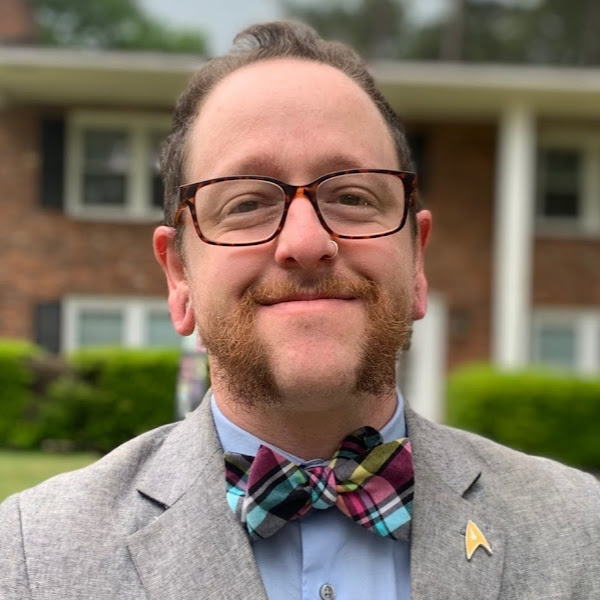
So there's a joke about why Oklahoma is windy, but I won't say it on air. So today we are joined by a man who isn't afraid to challenge the status quo. He's a former president, president of Oklahoma Wesleyan University, a contributing columnist for the Washington Times, and author of the national bestseller Not a Daycare. He's a longtime friend of our work. He's also joined us as a feature speaker at our 2011 think tank, the Oneis Pagan Poo. He's been on Fox News and he's come as one of the nation's leading voices on religion, education and the preservation of truth. So please welcome Dr. Piper Everett. I should say Dr. Everett Piper, not to be confused with Dr. John Piper. Welcome, Dr. Piper.
[00:01:33] Speaker C: Well, it's a pleasure to join you as one of the reasons that Oklahoma experiences so much.
So I'm pleased to join you all today.
[00:01:42] Speaker A: Dr. Piper, if you could, I'd love to hear, I think our guest would too, would love to hear the story of how you got connected with Truth Exchange and with Dr. Peter Jones.
[00:01:50] Speaker C: Well, when I took over at Oklahoma Wesleyan University, we can or cannot go down this path in terms of how much time you want to spend on it. But I was blessed. I was blessed with a crisis.
Now, when you experience a crisis, you never relish it. You always think, oh, my land, why? Why do I have to deal with this? But I was in my early 40s, I think I was 41, 42 when I assumed the presidency at Oklahoma Wesleyan University.
And the institution was in crisis.
In fact, we were about 12 months away from closing it down. We were essentially in bankruptcy. Our debt almost equaled our annual revenue.
Enrollment was down, debt was up, revenue was down. The arrows were crossing in all the wrong directions. They couldn't find anybody stupid enough to take this job. And here I am, a deer in the headlights in my 40s, my first presidency, wondering what in the world am I doing trying to make sense out of this crisis.
Now, in hindsight, I'm very grateful for that because I've learned that you can do a lot of things as a leader when you inherit crisis that you would never be able to do if you inherited success.
In other words, when you're managing a crisis and you're trying to keep the organization alive, you can take greater risks, people give you more latitude to do so, and you basically can approach it with the attitude of, we're going to wave the banner, the right banner, and if we win, waving that banner, great, that's God's grace. And if we lose waving that banner, so what? We were going to die anyway. We'll go down fighting. So that was the context for me deciding that we were going to drive a stake in the ground as one of those rare Christian universities of the. Of the current era that really paid attention to apologetics.
It wasn't just going to be a passing thought. We were going to double down and we were going to pursue the biblical worldview a la Chuck Colson, a la Josh McDowell, a la Peter Jones. So I was reaching out to some of the best thinkers that I was aware of to come and speak on our campus so that we could establish a reputation for taking a biblical worldview in Christian apologetics seriously.
And I stumbled across Peter. I enjoyed his writing. We invited him out. We actually developed a good relationship. I can't remember how many times he spoke on our campus, but more than once.
In fact, I've got a funny story to share with you. And then I'll take a breath and let you talk. Okay, Please do. So one of the first times, it may have been the first time Peter came out to speak in Oklahoma. And I'm sure the people listening to us right now on your podcast recognize that Peter is British and still has that British accent where he can read the phone book and sound, you know, brilliant, because it doesn't matter what he says, you know, the accent wins the day.
So I take Peter out for breakfast before our chapel on the campus. Let's say it's 8:30 in the morning. We go out to breakfast chapels at 10. So Peter and I sit down at this kind of this iconic Oklahoma breakfast joint called Eggbirds, and Peter looks at the menu and there is on the menu eggs Benedict.
So Peter, in his British accent, orders eggs Benedict and the Oklahoma waitress waitress leaves and comes back and brings my Bacon and eggs and Peter's eggs Benedict.
Well, the eggs Benedict at Egbert's is essentially biscuits and gravy with an egg on it. Okay.
And Peter with, in his, in his British panache, okay.
He says, ma', am, I ordered eggs Benedict. And this Oklahoma waitress says, honey, that there's what that is.
It was a classic exchange between Peter and this Okie. It was, it was, it was priceless. So.
[00:05:50] Speaker B: That is so. So Peter, because he's, he loves this food too.
[00:05:54] Speaker A: Oh, goodness, yes.
[00:05:56] Speaker C: So particular.
[00:05:58] Speaker A: And he was spoiled. He was spoiled while he was a missionary in France eating wining and dining, as the French do. And so whenever, whenever we do a staff, we would do a staff meeting or have a board meeting. Rebecca Jones, you know, would go for days at creating this gourmet meal in home and have everything prepared. And it's five course kind of thing. And so Peter does, he does cherish what he gets to enjoy.
There's a number of years ago you wrote it in your book, this is not a daycare. 10 years later. Do you see the snowflake culture that you identified then as having evolved into something more fragile? Or do you see that students today are more resilient because of things like the economic pressures and the shift from what they experienced in Covid and so on?
[00:06:56] Speaker C: That's a very interesting question.
I think every generation is going to take on a little bit of different, a different hue, if you will, than the one that preceded or any other generation. They're going to be different characteristics. I still think the cry for safe spaces is alive and well, which is really emblematic of the snowflake generation and why I wrote it's not a Daycare because of all the whining and complaining about contrary ideas. If you said anything that offend, if you say anything that offends me, if you bring a speaker on campus that disagrees with me and makes me feel challenged and uncomfortable, I cry microaggressions and trigger warnings and I cancel you because I don't want to hear it. It's like a toddler sticking his hand, his fingers in his ears and just trying to say, nana, Nana, I can't hear you.
It. It was and is very irritating and it's antithetical. What the academy should be, we should be about challenging each other robustly, not ignoring that there is a right answer at the end of the day, which is the mistake that the secular academy suggests that somehow we're just going to have a dialogue and it doesn't matter what you believe. As long as it works for you. And we're all going to come to some Kumbaya moment where we have a group hug at the end of the day. No, that doesn't work either.
But the Liberal Arts Academy, as you guys know, was founded on the concept of classical liberalism. And that meant liberty. A free man, a free woman, a free country, a free church, a free society.
And that freedom was grounded in a biblical worldview. You shall know the truth, and the truth shall set you free. So the parameters, the boundaries of God's truths give us greater freedom rather than less. Like GK Chesterton said, you get rid of the big laws of God, you don't get more liberty, you get less. You get thousands and thousands of little laws that rush in to fill the vacuum. So, to answer your question, is the Snowflake Rebellion over? No, because I think Covid showed us everybody wanted safety. In fact, Covid was the culmination of the Snowflake rebellion, I believe, because everybody gave up their freedoms for the sake of safety.
We gave it up in a shocking way. We just decided it doesn't matter.
Freedom, liberty, your personal rights to go out and walk in the park or go see your grandma down the street. You. You gave all of that up because you wanted to be safe. And I think that was. That was the outcome of the Snowflake Rebellion. I think we could. That that's where the train was leading now.
[00:09:35] Speaker A: Yeah.
[00:09:35] Speaker C: What I would say this. I would say that today's generation has added a lot of anger to that. The Nick Fuentes anger has been added to that Snowflake generation. And that combination of, I want my safety and I'm willing to give up any freedoms for the sake of that safety, combined with a lot of anger and resentment for the way especially young white men have been treated through toxic masculinity charges and whatnot. I think you combine those two things together, and you've got a very poisoned stew. Mm.
Yeah.
[00:10:12] Speaker A: Here's a question. So here's the. Maybe the other side of the coin, or maybe this is a whole other issue. Dr. Piper, is, as we have spoken to parents over the past, I would say probably five to seven years, there is a rise of concern from parents.
Now, seeing that colleges are not a safe space, not because that they're giving of a classical liberalism or classical education, but because they're indoctrinating and paganizing their children.
How would you respond to that rising concern from parents?
[00:10:51] Speaker C: Well, it's incredibly legitimate.
I believe it was Vodi Bakam that said, don't be surprised. I'm paraphrasing, obviously, don't be surprised that when you send your kids off to be educated by Caesar that they come back home acting like a bunch of little Romans. And I think that's a very accurate challenge and warning to those of us who care about passing on a biblical worldview to our progeny.
It's crazy.
Richard Rorty, who's dead now, but a philosopher of the.
Up until the 1990s, many people were still reading Rority. I can't remember what university he was teaching at at the time. It may have been Columbia, but I could be wrong on that. He was actually asked to speak at the freshman orientation to some parents and his stunning quote was, parents, we are going to go right on making your ideas, making your ideas seems silly and unacceptable to your children. He actually said that during freshman orientation to the parents that were paying 30, 40, $50,000 on the barrel head to send their kids to this prestigious institution.
So again, if you send your kids off to Rome or off to Caesar to be educated, don't be surprised when they start acting like a bunch of Romans. So, you know, you've heard the data that 70% of our student, 70% of students that claim to be Christian abandon their faith by the time they're sophomores or juniors in college. And I believe that's true. And I think the reason it's true is if you feed these young people, any people, whether they be young or old, but especially 18 year olds, if you're going to feed 18 year olds ideological carcinogens day in and day out, don't be surprised when they get cancer of heart, mind and soul. And indeed that's what's happening. So, but that's, that's not.
Some seculars might say, well then you're, then you don't believe in academic freedom and intellectual liberty. That's not what I said. What I said is the historical liberal arts model acknowledged that truth represented the healthiest boundaries for freedom that you could possibly have. It's the paradox of liberty and law, fences and freedom. Without the fences, you don't have freedom. Without law, you don't have liberty. And the classical liberal arts model acknowledged that.
[00:13:20] Speaker A: Yes.
[00:13:20] Speaker B: Yeah, I'm so glad that you. Back to that, Dr. Piper, you, you were talking about how classical liberal arts education is based on a dialogue that leads to the truth.
So there's that underlying assumption that there is a truth. And I think that that protects us then from having fringe ideologies and fringe, fringe like kind of politics and Ideas being held onto the way that we see them being held onto right now. Because if there's no truth, just dialogue and personal truth, then all of these crazy things like transgender ideology, race essentialism coming back in, things based entirely on experience, then are fomented in the university setting. And if no one has objective truth to cling to or to point, point to within the dialogue, it, it turns into ideological warfare with, you know, the things that, that we're seeing right now. So I, I, I appreciate that point so much that, that, that acknowledgment of the existence of objective truth that can be found via dialogue is so lacking in our education at this point. In good, in mainline education at this.
[00:14:40] Speaker C: And here's the beauty of a biblical model, a Christian model of a liberal arts education. The secularists might challenge this conversation we're having and saying, well, you guys don't even believe in exploring new ideas, understanding the various different mosaic of a pluralist society, blah, blah, blah, blah, Right? No, I do. And I want my students to understand that mosaic as well as anybody. I want my students to understand the contrary idea. But here's the difference. I don't just present it in a neutral way and say, you pick and choose students. Right. I share the contrary idea. I want them to understand the LGBTQ argument as well, if not better than anybody.
[00:15:22] Speaker B: Yes.
[00:15:22] Speaker C: But I'm not going to leave them hanging right. At the end of the lecture, at the end of the conversation, on a daily basis. I'm going to let them know why I, as their teacher, have concluded the, that this idea is right and this idea is wrong. If you want to debate me, students, bring it on. But I believe that the ontological, biblical, theological, biological air of LGBTQIA is obvious. And I'm going to tell you why. Do I want you to understand what they're saying? Absolutely. Am I going to leave you hanging to make up your.
To, to, to conclude that maybe I, as your professor, am neutral on this issue? Absolutely not.
[00:16:02] Speaker B: Right.
[00:16:03] Speaker C: Absolutely not. Does that make sense?
[00:16:05] Speaker A: Yes. Is this where you're applying the Bethlehem vs. Berkeley about free speech?
[00:16:10] Speaker C: Yes.
[00:16:11] Speaker A: And the microaggression warnings or the increasing censorship that comes on campus and allowing the university. So how does the university come back to that place, that model of iron sharpening iron?
[00:16:24] Speaker C: Well, iron sharpening iron implies that there's a reality, there's something solid, that there's, there's a cognitive dissonance. There's, there's a reality that there's a give and take, push and a shove. It's the value of the wrestling match, if you will. The, the.
If. If everything's soft and fuzzy and fungible, then you're not going to sharpen anything. It's just going to be a indistinct culture. And eventually that vacuum is going to be filled by something. It's going to be filled by what we see right now in the debate. There's going to be anger, there's going to be resentment.
Students that have been taught for decades that it doesn't matter what you believe as long as it works for you, and that one idea is just as good as another, they're going to get mad, they're going to get angry, and they're going to decide, well, anti Semitism is better than. Because I've decided that anti Semitism is legitimate. You're going to hear Nick Fuente say that he thinks Hitler's pretty cool and he really likes Joseph Stalin. Allen. Well, then I'm going to embrace that, because that's the only way I'm going to get what I want out of culture. And if somebody turns around, says, no, those are unacceptable ideas. The student is going, perhaps rightly, logically, anyways, look back at the, the liberal, the progressive establishment that's now saying, well, you can't think that. You can't say that. You can't do that. And they're going to say, says who? Yeah, you're the ones. You're the ones who told me that everything's okay, that there is no right or wrong, there is no up or down, that good is evil and evil is good. You're the ones who told me that. So who are you to tell me that antisemitism is bad and Nazi fascism is evil and that I shouldn't embrace those things to get what I want? That's what we've created. We've created a monster by teaching them that nothing matters, when at the end of the day, they'll use that argument to orchestrate a very totalitarian culture. Because the vacuum has to be filled. It's not going to remain neutral. It can't.
[00:18:24] Speaker A: Right.
[00:18:24] Speaker C: It just won't. Physics, a vacuum is always filled.
[00:18:27] Speaker B: Yeah. Discipleship does indicate that there is authority. And I think that, you know, you were talking about as the professor, you're not going to be to pretend that you're neutral in the training up of these students. And that is discipleship. You are an authority. You have gained wisdom. Wisdom is founded on objective truth that holds when you place weight on it. And I find, especially with white, you're describing that when you remove all authority, then the ultimate authority for anyone who's being trained in that system becomes the worship of self. And so anything you experience, anything that's pressed on you, that doesn't allow you to worship self, then is attacking the only authority that you've been given. But when we have the outside authority, and when here comes one is a mentalism, when we have that outside authority by acknowledging a to a system where there is a God who created, who has authority, who has set out rules, who puts down a mandate for us to train our children up so that they know the paths in which they should walk, then you have a real authority that, that keeps you from that self destructive self worship. And it seems strange that self worship is self destruction, but Romans 1 makes that so clear.
[00:19:41] Speaker A: So you stole my line, Mary. That's exactly where I was going to go.
[00:19:46] Speaker B: You're welcome.
[00:19:49] Speaker C: But if I just. This is what attracted me to Peter Jones's teaching.
This is the Piper paraphrase. It's not nearly as erudite as what Peter would suggest. And I don't have the British accent, so I can't get away with reading the phone book right now. But the idea that we worship ourselves, this is the original sin.
It goes back to the original sin where Satan says that you can be as God, you can be God. You don't need him any longer to tell you the difference between good and evil, right and wrong. You don't need God any longer. You can be God.
So we start worshiping the God we see in the mirror rather than the one we see in the Bible. Yeah, and that is a story as old as humanity. We all know it. And that's exactly what's happening right now. If you don't have God as the authority over the academy, you're going to have some other God that replaces the real God. And that God is what it's always going to be, what you see in the mirror. Because we all think that, that God is the best one of all. Unless we're willing to humble ourselves in repentance and confession to the God of the Bible.
That may sound too Sunday Schoolish.
Like I said, I've butchered Peter's worldview. But I think as a Sunday school student under his teaching, I think I've at least captured some of what he wants us to understand. And I think that's what attracted me to his apologetic.
[00:21:22] Speaker B: It's interesting.
Our eldest is getting ready to graduate. Graduate from Providence Christian College, which is a small, small reformed liberal arts college in Pasadena, California. And Bob and I had the opportunity to go up last Saturday and see her give her capstone project. So she's an honors student, and each of the students, at the end of their time at Providence, they give a capstone presentation.
And she was looking at the effects and realities of cultural Marxism and how it was brought into such a flourishing state in our culture. And really, she was comparing, like, the culture of human flourishing versus the culture of death.
And it was remarkable seeing her. You gave the statistic. About 70% of kids who go into college professing Christ come away having lost their. Their Christian belief. And what I found with our daughter in this robust kind of setting that you're talking about, similar to what you guys were you created under your leadership at Oklahoma Wesleyan. I know because I had a friend, Laura, who attended there after you started speaking with us at Truth Exchange. She has come away strengthened in her faith, passionate about seeing real change enacted and being able to explain to people who are just kind of flailing around in this culture of death the beauty of a foundation based in biblical truth. And it's been so, you know, it's scary as parents to send your kids off. We have two in college, one in a trade, and one who's a sophomore in high school right now.
It's really scary seeing them choose those paths that they're going to take. But it's been so beautiful and so encouraging sending off the two that we have in college and seeing them come back to us with a robust faith and excitement about calling, really analyzing, not just what job is going to give me the most money, but how they can, as a man and a woman, young man and woman, raised up in the faith, but then established in the faith at college, how they can use that calling to glorify God and to help the community around them. And so I'm so glad that there are still options out there that offer the kind of education that you're holding up as superior to what a lot of our students are getting right now.
[00:24:12] Speaker C: I would say this, and I appreciate that.
I would offer a word of caution to all the folks that are following you in this podcast and otherwise, the institutions that are holding unapologetically to a biblical world view, the inerrancy of scripture, the. The primacy of Jesus Christ, the priority of scripture, the pursuit of truth, and the practice of wisdom. These are the things that I call the four pillars, the four corner posts, if you will, of the fence of freedom. Okay? The primacy of Christ. Jesus is the Son of God, the priority of Scripture, the Bible is the word of God, the pursuit of truth. Truth is given by God. It isn't made up by you or me. And the practice of wisdom, holiness, sanctification, obedience unto the Lord, it's, it's demanded by God. It's not optional.
[00:25:00] Speaker B: Right.
[00:25:01] Speaker C: If, if there's any definition of mere Christianity, I hope those four things are in it.
And if, if we can hold tenaciously to those four things within the academy, then I think we're going to have a great outcome in terms of what our students learn and the worldview they embrace. But I can tell you right now from being a leader within the Christian College Academy, within the cccu, the Council for Christian Colleges and Universities, that the institutions that hold tenaciously, unapologetically to that worldview are few and far between.
[00:25:32] Speaker B: Yes.
[00:25:33] Speaker C: So consumer, be careful. Ask the right questions. Don't assume anything. Any college or university can put together a nice four color brochure that tells you that they're Christ centered and that they're evangelical.
[00:25:44] Speaker B: Yeah.
[00:25:45] Speaker C: Pull back the curtain. Ask good questions. Because I'm telling you right now, and I'm not exaggerating, nine out of ten of them aren't.
[00:25:51] Speaker B: Right.
Right.
[00:25:54] Speaker A: Yeah. So, I mean, that really feeds into. My next question is how do parents prepare the minds and the character of their children really to go into the institution when those kind of pillars aren't in place?
[00:26:11] Speaker C: Well, first of all, I would highly recommend.
There's more than the two I'm going to suggest, but I have personal experience with these two Christian Worldview boot camps for young people.
Worldview Academy does a great job.
I sent both of my boys to Worldview Academy that's designed for a younger person like 14 to 17.
And both of my boys went to at least two successive summers of Worldview Academy. It's a one week camp experience during the summer where a biblical worldview in Christian apologetics is just.
That's the reason for the camp. I mean, they're immersed in a biblical worldview and they've got some excellent instruction. And then for the older student, like the senior in high school, maybe even a freshman in college, is Summit Ministries. Yeah, I think both of those are excellent boot camps for young people in preparation for collegiate life and preparation for life in general.
If I only had, if I had to pick or choose between the Worldview Academy and Summit Ministries versus a Christian college education, I'd pick those two before I'd pick a Christian college because those things are so critical in my view, and some people may be surprised to Hear that? Because I was the president of a Christian university. But I really believe those things are critical. And then the other thing I would suggest is when they're ready to go to college, ask the right questions of the institutions that you're considering. I would basically say, as a parent, you need to call the president of the university that you're considering to send your kid to and demand a meeting. Well, ask for a meeting.
If the president doesn't have time to meet with you, I would say go someplace else, because there's no good reason for that president not to put you on his schedule. And I was a president. I was busy. But I never turned down. I never turned down a request to meet with a parent, ever.
Because you're paying the bill, and I owe you that respect. So, number one, you're thinking of sending your kid off to institution X, Y, or Z, Call the president up, get a meeting, and when you're in that meeting, ask him some questions. What's your view of scripture?
Be quiet.
Just let him talk.
If he says it's inerrant, it's infallible, it's the word of God. That's what we teach. We'll never compromise it. Good answer. If he doesn't say that, there's a reason. It's not because he didn't understand your question.
He's dodging.
[00:28:44] Speaker B: Yeah.
[00:28:45] Speaker C: What's your view of scripture? Another one would be, what's your view of truth? Is truth an objective. Don't ask this way. Just say, what's your view of truth? Be quiet. Let him fill the uncomfortable silence. He should say it's an objective reality, a revelation of God. It's not a postmodern construct of man.
[00:29:01] Speaker B: Yeah.
[00:29:01] Speaker C: That's what he should say. If he doesn't, wrong answer. Run the other way. And then there's some other litmus questions that I would ask. What's your view of marriage? What's your.
What's your view of life? Yeah.
Yeah. And today I would ask some questions that I didn't used to even consider back in the earlier years of my presenting. I. Tell me what you think of Black Lives Matter. Blm.
How about critical theory?
[00:29:27] Speaker A: What is a woman?
[00:29:28] Speaker C: Crt.
What is a woman? Can you tell me what your definition of a woman is? I'm serious. These are questions you ought to ask.
And you're gonna be able to tell within seconds whether or not this is a place you want to send your kid. Yeah. And if you have any gut feeling. If you have any gut feeling that you're getting Kind of a dance rather than a strange, straightforward, immediate response of conviction, then trust your gut and don't send your kid to that school.
[00:29:56] Speaker B: Yeah. Yeah. James Lindsay had a New Discourses episode a number of years ago that I found extremely helpful.
And along with what you're saying, Dr. Piper, he was encouraging people to start to recognize the keywords of false beliefs, the keywords of false ideologies or radical ideologies. And of course, he was not talking in terms of Christianity in this particular episode. He was actually more talking about cultural Marxism. But I know that when I hear people focus a lot of their language on things like equity, but you can tell that equity doesn't mean, you know, doesn't mean, you know, equality of opportunity. There. There are just different things like that. And I think that that's something for parents to do too, which is to, as they're getting ready to consider which presidents they can go and visit and have these conversations with, is to really, like, look through the websites that are available to them for these universities. And if they see a lot of this kind of DEI language, this social justice language, this ideological language throughout, even if it's couched in biblical terms, to view that. To view that as a red flag. We've found my Bob, now that I know you're an elected official, Dr. Piper, a county commissioner.
My husband Bob ran for school board and unfortunately, or fortunately, depending on the day, won his seat as well for the public high school district here in Escondido, California. And we spend a lot of time during meetings listening to and then discussing and researching afterwards certain words that come up, certain things that pop up where it's just like that. That phrase seems out of place. Like, I expected that they would say that their goals for their students were xyz and instead I'm hearing something about addressing oppression, and that seems a little strange. So then going in and researching those concep. And not even nine times out of 10, I think at this point, 10 times out of 10, what we've uncovered is that the trainings or the curriculum or the issues that are being discussed really are just wildly inappropriate for an educational setting. So I would encourage people to think in those terms as well.
[00:32:27] Speaker C: Spot on. If. If you stumble across the word you've mentioned, equitable or equity, if they're using that rather than equal or equality, there's a reason. Yeah, they know why they're using it. There's a reason they're embrac. Embracing Mark Marcuse's language rather than biblical language. And there's A reason that they're leaning into Marcuse rather than the Bible. Right straight out of the Frankfurt school.
So equitable systemic intersections.
Social justice rather than biblical justice. I get so irritated with Christian colleges or even Christians that talk about social justice. Stop talking about social justice. Start talking about biblical justice. There's a huge difference between the two. Yeah. Stop talking about equity and start talking about equality. Quit blaming the systems and start encouraging personal responsibility, culpability. There's nothing wrong with teaching a student to pick himself up, to pull himself up by his own bootstraps and take responsibility for his own life, his own, his own outcomes and his own success. And anything that's going to teach him to point the finger outward rather than to look inward to and accept responsibility for whatever ails him. Because it's his fault, his responsibility to fix it through confession, through repentance, and then through hard work. Then if that's not what they're teaching, they're leaning into, like I said, Marcuse and critical theory more than they are into the Bible. And why would you want to pay for a Christian college education that's just warmed over Frankfurt school nonsense?
[00:33:59] Speaker B: Right, right. Just additional and an additional layer of deception by layering it with sounding terms. Yeah, absolutely.
[00:34:09] Speaker C: There was a Catholic.
Oh, I forget his name now. A Catholic bishop, I think that years ago said, wolves in sheep's clothing are dangerous, but wolves and shepherd's clothing are deadly.
That, that's great wisdom right there.
[00:34:23] Speaker B: Yeah.
[00:34:24] Speaker C: Watch out for wolves and shepherd's clothing.
[00:34:26] Speaker B: Absolutely, absolutely.
[00:34:29] Speaker A: We've talked a little bit about dangers of the left, and I feel like we'veyou've hinted at Dr. Piper of some of the dangers on the right.
Given your track record and your history of being in higher education, do you see a greater danger of what's happening on the left or a greater danger on the right? And could you describe if you see a danger on the right, what does that look like today?
[00:35:04] Speaker C: Well, right and left, first of all, because things are getting so weird right now. I'm careful. I think we need to define our terms whenever we're talking to somebody. So what does right mean and what does left mean?
But yes, to answer your question, I see political left and political right horseshoeing toward each other where they're almost indistinguishable at times. For example, Nick Fuentes. I have no patience for that. Nick Fuentes is a vile, vulgar, angry young man who is explicitly promoting anti Semitism. And like I said earlier, he says he thinks Hitler is really cool. That's a quote. He says that he really, really likes Joseph Stalin. Why in the world would we embrace those ideas? Why in the world would we excuse it? Because he's not left wing, I think real conservatives, real conservative. And I define myself as a conservative more than right. Why do I do that? Because I believe in conserving things. I'm a conservationist. Yeah. I believe in clean air and clean water. I think those are good things. I'm going to conserve those. But I believe in conserving something that's even more important than the material.
I believe in conserving the ideas that have withstood the test of time, that have been around for a while. Ideas that are true because they've been measured over and over again against the word of God and proven over the course of the centuries to be right.
That's what a conservative is. And conservatives, because that's where our foundation is, we have the confidence to challenge our own.
[00:36:45] Speaker A: Yes.
[00:36:46] Speaker C: I've been very critical of Donald Trump. I voted for him twice.
Maybe you guys don't want me saying that on your show.
[00:36:52] Speaker A: Go ahead.
[00:36:52] Speaker C: But I've been very, very critical of him when he's vulgar, inappropriate, misogynistic, and just wrong.
Why do I do that? Because I've got confidence in the truth more than I do in my political party.
[00:37:05] Speaker B: Yes.
[00:37:05] Speaker C: I'm a conservative.
[00:37:07] Speaker B: Yeah.
[00:37:07] Speaker C: I can ground my critique in that conservation of what's right and wrong, good and bad, true and false, and. And that's what makes a conservative's foundation stronger and more permanent than political right or political left. Because we're seeing those political parties shifting right now away from principles toward power.
[00:37:29] Speaker A: Yes.
[00:37:30] Speaker C: If you don't have permanent principles that you're willing to conserve and fight for, whether you're right or left, you're going to lean into power at the end of the day. Does that make sense?
[00:37:38] Speaker B: Yeah, I think that Nick Fuentes. So let's just take the statements that he's made and the things that he stands for.
He's a race identitarian. He's into racial identity in the same way that the quote unquote left is. It's just that he puts a different color on it. And I think that he.
And for instance, like the Black Lives Matter, where there's like bipoc supremacy, and then you have, on the Nick Fuente side, white supremacy. They are the same thing with different colors applied. And I think that they result from the same system that you've been describing this entire time. It's just that they apply the. The same ideology to different races, different colors, and they, they use different terms. But when you dig underneath, you find all of the same ideas. They aren't.
Not really all that different at all from what I can tell. And I think the strange thing is then that both sides land in anti Semitism as a result. Right. So you can be BLM and, and, and an anti Semite at the same time with not much conflict, and you can be a Nick Fuentes ultra quote unquote right race identitarian on the right and, and have anti Semitism and not run into any conflict. And that's because your foundations are the same.
[00:38:58] Speaker C: Spot on. And both worldviews are broken by sin.
[00:39:00] Speaker B: Yes.
[00:39:01] Speaker C: And therefore both worldviews are racist at their core.
[00:39:04] Speaker B: Right.
[00:39:04] Speaker C: It's just they're advocating for one race versus another, their own race versus everybody else. It's the same thing. You're spot on. It's the same worldview.
[00:39:12] Speaker B: Yeah.
[00:39:12] Speaker C: That's not a biblical world. And we should challenge that confidently as conservatives.
[00:39:18] Speaker B: Yeah.
[00:39:18] Speaker C: Candace Owens. Same thing. Right Now Candace Owens is out there saying ridiculous things. She's, she's advocating blood libel. Yeah. She's talking about flat earth theory. She's denying the moon landings. I mean, and people are buying all of this because she's conservative. No, she's not conservative. She's right wing, perhaps, but she's not conservative because she's not interested in conserving truth. She's interested in perpetuating these narratives that give her more power through more clicks.
[00:39:44] Speaker B: Right.
[00:39:45] Speaker A: Yeah. And the racial issues is that. And they'll say, well, this is the natural thing, is to protect your family.
And they'll make that as a biblical argument. But it's an antithesis to the Gospel, which. The gospel brings in all races, nations, tribes, tongues and peoples because Christ is redeeming them and he's redeeming the cosmos through his work.
So Merry Christmas to all.
[00:40:19] Speaker B: Well, it's interesting though, Joshua, because Christ redeems by individuals. Right. So he redeems and calls individuals who are made in his image male and female. He calls them by name.
And I find that with this identitarian politics, we run into the same thing that we see in, for instance, like Hinduism, where there's. There's an effort to blur the boundaries of each individual into groups or into the whole.
That, that ultimately, spiritually it is the same thing. It's a doing away with each precious individual human being who has dignity and worth by right of their having been made by a holy God. As soon as you get away from that idea you run into all of these problems, and so there's a spiritual similarity in those things, in its result that I find really interesting. And I don't know if that's completely out of left field, but if you take the individual and you just merge them into people groups, you know, and this identitarian way of politicking and way of believing, and if you, as a. Like a mystic who believes in the inner divine and you're taking the individual and you're merging them into the whole, you're really doing the same thing. Like Satan is always after attacking image bearers. And image bearers are individuals who are responsible, each one of them, before a holy God, for whether they have followed and believed in him or not.
[00:42:02] Speaker C: So I. I think. I think one of the most important questions. And maybe go back to another question you should ask the college president before you send your kids to this place.
How do you define the human being?
[00:42:13] Speaker B: Yes.
[00:42:14] Speaker C: One of the most important questions of our time is the definition of what it means to be human.
[00:42:19] Speaker B: Yes.
[00:42:20] Speaker C: And the biblical definition is clear. You're the imago de. You're made in the image of God.
[00:42:24] Speaker B: Yeah.
[00:42:25] Speaker C: Period.
You're not the imago dog. You're the imago day.
[00:42:29] Speaker B: Yeah.
[00:42:29] Speaker C: You're not defined by your desires, your inclinations, your proclivities. That's not your identity. Human identity is a lot more than the sum total of your inclinations.
But the LGBTQIA argument is you're defined by your gut, your belly, your libido. The biblical definition is that you're defined by your Lord, not your libido. We are the imago dei. Were not the imago dog. In fact, I had a contract to write that book.
Okay.
[00:42:57] Speaker B: You're not the imago dog.
[00:43:02] Speaker C: The title was going to be Omago Day, not Omago Dog. And the whole argument was to define humanity biblically. So, yeah, and I had a contract, and I had a good advance on it, and the conservative publisher reneged on me because they got nervous. They didn't want to publish that book.
And. And I had. I. I had to write a different book, which is Grow Up. The sequel to Not a Daycare is Grow Up. The reason Grow up was written rather than Amago Day, Amago Dog is because the publisher got nervous and didn't want to go down this path of identifying the human being properly. And guess what happens A couple years later, Matt Walsh does what is a woman? And it goes bananas. Yeah, it goes bananas. Because he had the guts to define humanity biblically by asking the rhetorical Question, what is a woman? But a conservative publisher didn't have the guts to do the same thing.
[00:43:58] Speaker B: You know, that's so interesting. We had Ashley Landy on the podcast a couple of weeks ago, and Ashley wrote a book called the Thing that Would Make Everything okay Forever. And it's her journey through life taken over completely by psychedelics and coming to Christ. And it's a wonderful book. But one of the key points at which she really started to question her worldview was after she had a son and someone had given her a book.
And in the book, it was kind of regurgitating her very Hinduistic, kind of yogic based beliefs that went along hand in hand very well with her psychedelic use. And it said something about like, I am the sun, I am my feet, I am the dog across the street.
And Ashley was looking at this and thinking, well, yeah, if we, you know, she had this idea that all really is one, that there's not really very much distinction, but this idea of this precious little image bearer whom she had born and loved so dearly, being afoot or being the dog across the street, being no different, in essence really bothered her. And it was. It was a linchpin for her.
And I have probably more extensive collection than any Christian should have of LGBTQ children's books.
[00:45:28] Speaker A: Welcome to the ministry of Truth Exchange.
[00:45:31] Speaker B: You were asking about what I've been up to, Dr. Piper, and I was six or seven years working with the ideas of gender and a theology of gender and looking at LGBTQ ideologies with regard to gender. So I have a ton of these books and one of them, and it is encouraging children to consider whether they can be, you know, a boy or girl trapped in the wrong body.
But the title of the book is I Am Tree.
So when you lose these distinctions that you're talking about, this imago DEI distinction, you lose every distinction.
And it's remarkable how, as scary as that is, these suppositions, put in such simple terms, do seem right now in the culture to be driving people back towards biblical truth. Because you do get to a point where the loss of those distinctions is so destructive and untenable that they begin to long to know who the creator is.
[00:46:37] Speaker C: And I think, lest I come across as too much of a downer, okay. All of these problems that we're facing today, I'm going to quote a guy that I think is a mutual friend of ours, Jim Garvey.
Okay. Garlow co authored a book with Peter.
[00:46:55] Speaker B: Yes.
[00:46:56] Speaker A: Cracking the Da Vinci Code.
[00:46:57] Speaker C: Okay.
[00:46:57] Speaker B: Cracking the Da Vinci Code.
[00:47:00] Speaker C: Well, Jim Garlow is a great, he would be wonderful in this conversation. Jim's a good man, highly respected within his church, within the leadership. I mean, Jim is a, is a good man.
And in the midst of a lot of this message, as I talk to Jim, Jim's response is this. What a wonderful time to be alive.
And you, you all probably understand that better than most listeners right now because Jim's a fighter.
[00:47:31] Speaker B: Yeah.
[00:47:32] Speaker C: And what a wonderful time to be alive because the battle lines are clear and there's a huge opportunity because human beings long for answers. Yes, because we're made in the image of God. We want to find out what's true. Yes, we do this. We debate, we argue, we talk, we have conversations.
In fact, the way I in it, this is almost always work. You know, I'm a simple guy. I'm a blue collar kid.
I try to boil things down to their elementary essence when I, when I'm trying to figure them out and when I want somebody else to understand them. So when I'm out talking at whatever the venue might be or whoever the audience may be, when we get to talking about human identity. Imago de Amago dog. Here's the way I try to drive the point home. And I almost always get. People look at me like, ah, I get it. I say this.
I live in Oklahoma. I live out in the ranch country of Oklahoma. There's a 40,000 acre ranch right next to me, but it's right up against my property. There's another seven small ranch of 7,000.
I mean, there are cattle everywhere. This is ranch country. They raise beef. So when I drive from my home to the Tulsa airport to fly out to meet with you guys or anything else, I have to drive through all of these ranches to get there. And you know what? As I've driven through those ranches in northeast Oklahoma, heading from my house to the Tulsa airport, looking out in those fields at all those thousands and thousands of cows. I've never once seen any of them arguing with one another. Haven't seen.
I don't see them having arguments or debates. They don't do podcasts, they don't do talk radio. They don't do this.
Why? Because they're not human beings.
[00:49:21] Speaker B: Right.
[00:49:22] Speaker C: They are the Imago dei. Those cows are defined by their desires, by their belly, by their gut, by their inclinations. But you are not defined by those things. You're defined by God because you're his image and your very inclination to agree or disagree with me. Right now, as I'm saying This is proof, to the point. Because if I were talking to a cow, he doesn't care. She doesn't care.
[00:49:49] Speaker B: Yeah.
[00:49:49] Speaker C: Animals don't care about truth.
[00:49:51] Speaker A: That's right.
[00:49:52] Speaker C: Human beings do, because we're made in God's image to pursue it.
[00:49:56] Speaker B: Yes. Amen. I love that.
I love that.
[00:50:01] Speaker A: Mary, take us home.
[00:50:04] Speaker B: All right. Well, I promised before we started recording that I was just going to tell one story because I think it's hysterical and people haven't seen the movie. They should go see it. So Dr. Piper is all of these glorious things that we've talked about, but he's also a movie star, and he was highlighted in a documentary, I think it was, in 2017, maybe 2018, called no safe Spaces. And it was about this very issue that we're talking about, how crazy things had gotten on college campuses. And so I didn't know he was in the movie, but Bob and I were really excited to go see it. And so we went to the local movie theater, and it's fairly lengthy. And so at some point, I got up and whispered to my husband that I needed to use the restroom. And I started to go down the stairs at point some in a stadium theater. And all of a sudden, I looked up and I saw Dr. Piper on the screen, and he was being interviewed, and I was like, oh, my gosh, I have to tell Bob. So I went running back to our seats, and I grabbed him around the neck, and I stuck my face right up next to his face because it was in the theater, and I didn't want to interrupt anybody else. And I said, babe, babe, we work with him. I know this guy, Dr. Everett Pfeiffer.
And he. The guy goes, what? And all of a sudden, I hear Bob whispering, mary, Mary, what are you doing? And he's one row in front of me, and I run into the wrong room of the theater because I just. I've adored Dr. Piper, and I was so excited to see him on the screen, and I wanted to tell my husband, but I grabbed the wrong man. And this woman leaned around her husband that I was holding onto. What are you doing?
[00:51:55] Speaker C: And. And I want all of your fans to know I'd never heard that story until you called me to schedule this particular interview. And I think it's the funniest thing.
I just wish. Wish I could have been a mouse in the corner watching this take place.
[00:52:08] Speaker B: That's so funny about it on Facebook afterwards, because it's such a me move. Like, I get so excited. Something that's funny.
[00:52:18] Speaker A: I. I Had the same reaction when I. I saw the no Safe Spaces, because I thought, I know that guy. I was just in a conference just like a year prior, we had done the college project where we had flown out a number of faculty from various Christian colleges. And Dr. Piper, you zoomed into that meeting.
But I thought, yeah, it's funny that Dr. Came out. I was like, I know him. I know him.
[00:52:44] Speaker C: And you know what?
Funny as this story is, and it is funny, maybe this is a good way to bring this podcast home. Sure. The Adam Carolla was one of the producers of that.
And everybody knows Adam Carolla is not a Christian. He's an atheist.
[00:53:01] Speaker B: Yeah.
[00:53:02] Speaker C: He's a comedian, an atheist. He leans into some conservative issues.
[00:53:05] Speaker B: Yeah.
[00:53:06] Speaker C: Well, I had been invited to go out to be on Adam Carolla's show.
And Adam Carolla, if I remember correctly, his show is two hours long.
And I came in at an hour and a half.
And I tell people, if you go Google Everett Piper, Adam Carolla, I'm not responsible for anything he says in the first hour and a half, because Adam Carolla's humor can be very raw, shall we say? And I think I'm being generous.
Okay. So I come in an hour and a half into the show, and I talk about the primacy of Jesus Christ, the priority of scripture, the pursuit of truth, and the practice of wisdom. I tell Mr. Carolla that G.K. chesterton says that when you get rid of the big laws of God, you don't get liberty. You're going to get thousands and thousands of little laws. I tell him about CS Lewis saying that you can do no measuring without a measuring rod outside of those things being measured. Mr. Carolla, we've lost the measuring rod of truth with a capital T in our culture, and we're experiencing chaos as the result. Yeah. A half hour of me doing this stuff. Imago Dei, Imago Dog Truth, this and that.
G.K. chesterton, C.S. lewis. Primacy of Christ, priority scripture, pursuit of truth, practice of wisdom. I give it all.
I back the truck up and I dump it on Adam Carolla.
Guess what he says at the end of the show?
He says, thank you, Dr. Piper. What the world needs today is more of this wisdom.
Okay? And that's not to boast in anything other than the truth of Christ and the truth of Scripture.
The world is hungry for this. The Adam Carolla's of the world. Get this. They get it. I was invited on Dave Rubin's show, same time frame. And Dave Rubin, conservative. Yes. Not in sexuality, because he's Quote, unquote, married to a man.
[00:54:53] Speaker B: Right.
[00:54:54] Speaker C: Dave Rubin. I'm on his show for an hour. Well, guess what? We talk about the primacy Christ, the priority of scripture, the pursuit of truth. G.K. chesterton. C.S. lewis. You can do no measuring without a measuring rod. Outside of those things being measured, get rid of the big laws, you don't get liberty. You get thousands of little laws. Mr. Rubin, an hour of this, I hop in the taxi out there in California to come back to God's country in Oklahoma, I might add.
I'm sitting in the taxi driving from Reuben's studio to LAX and my phone goes off and it's going nutso.
Because Reuben has texted to his millions of followers the following quote, if more guys said what this guy just said, we'd be a freer, braver and wiser nation.
Now, if Dave Rubin gets it and Adam Carolla gets it, then so will your neighbor.
[00:55:44] Speaker B: Yes.
[00:55:45] Speaker C: Okay. So will your kids.
[00:55:47] Speaker B: Absolutely.
[00:55:48] Speaker C: The world gets this. They are a dry sponge just begging for water. So have courage, have confidence. Go give it to them. They want the truth.
[00:55:57] Speaker B: Absolutely. Well, Dr. Piper, that's wonderful. And I actually, I'm going to be texting my friend Sarah after this. I have 16 Sarahs on my phone, but this particular Sarah, she prays for almost daily.
She. She loves him. She thinks he's funny. She sees his conservative views and some issues and. And appreciates so much of what he's done. And she prays for his salvation. And so I'm. I'm excited, excited to tell her that story.
Where can our listeners most easily find you should they want more of this, which I'm sure they will.
[00:56:33] Speaker C: Well, if they're gluttonous for punishment, you can go to.
It's Dr. Everett Piper. That's D R Everett Piper. One word, so I'll spell it out. D R E V E R E T T P I.
That's my website. You follow me on Twitter? It's Dr. Everett Piper. I've got two Facebook pages. One is under Dr. Everett Piper. The one other one is under Everett Piper. If you're interested in reaching out to me, go to my website. You can get a hold of me personally there to speak at your events or whatever you want. So, yeah, that's how you can get a hold of me. And I'd be honored to speak at anybody's events or churches or political events or anything like that.
[00:57:14] Speaker B: Fantastic. I'm so glad that we've gotten to rekindle this friendship. And thank you so much for taking the time to be with us. And I hope it's just the beginning of much more interaction in the future.
Joshua can put those links in our show notes also so it's easier for people to access. Definitely go see no safe spaces if you haven't before, but try and keep your excitement to you and your spouse and not not someone in the road behind you. And as we're coming towards the end of the year, I just want to thank our listeners and our followers so much for spending every week with us this hour of conversation.
We cannot do what we do at Truth Exchange without your help. And at the end of the year, I know that a lot of you are conspiring which ministries and services you want to help support, and we would be so honored if you would choose Truth Exchange as one of those ministries. We believe that there's a growing need for what we do rather than a receding need.
The mission that we're on is urgent, and we hope that we've helped you with this conversation today and that we can continue to do more of that in the future. You can get to
[email protected] that's truth, the letter X, the word change.com.
you can find us on X, you can find us on Facebook and you can always email us or drop a line, leave a substantive comment, ask us a question. We love to hear from you guys. And in the meantime, God bless you. Dr. Piper, thank you so much for being with us today.
[00:58:48] Speaker C: Thank you and Merry Christmas to you.
[00:58:50] Speaker B: Merry Christmas.