Episode Transcript
[00:00:02] Speaker A: Welcome to the Truth Exchange podcast. This is the unique program where we have conversations about worldview all through the lens of oneism and two ism. This lens is based on Romans 1:25. We exchange the truth of God for the lie, worship and serve creation rather than the Creator who is blessed forevermore. Amen.
I'm your host, Joshua Gilo with Mary Weller, my co host. Mary, good to see you.
[00:00:25] Speaker B: Hi Joshua, it's good to see you again and welcome.
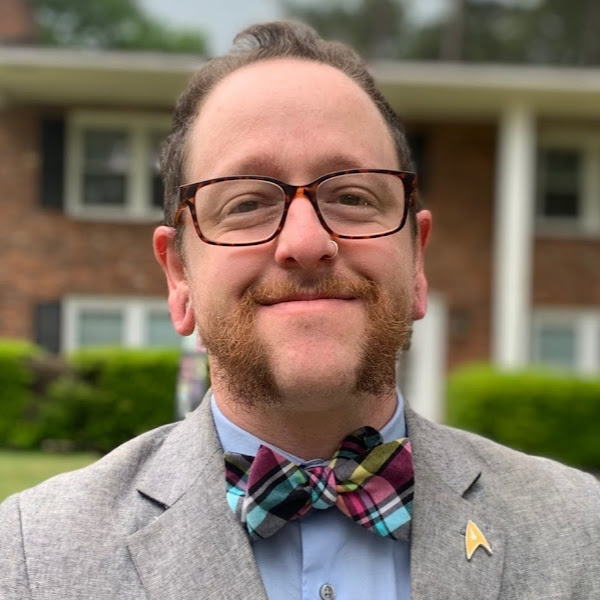
[00:00:27] Speaker A: And we have a special guest on the podcast today with Reverend Ben Glasser, who is a minister in the Associate Reform Presbyterian Denomination.
Ben, thank you for coming on the show today.
[00:00:38] Speaker C: Thanks for having me, Josh.
[00:00:39] Speaker A: We were just reminiscing a little bit before we hit record, but Ben and I have known each other for quite a long time, close to 15 plus years.
And I've really wanted to have Ben on the podcast because he's a very well read individual and deals with a lot of the things I've seen just on social media in terms of worldview. And so finally, we have a subject that I think will benefit not only our listeners, but also will be something that they can also enjoy. And the subject for today's episode is on racial realism.
And at this year's Senate for the arp, Reverend Glasser, you got up on the microphone and you asked, you called the attention to an issue that I think our listeners need to know about. And if you could, could you tell the audience about the statement that you made on the floor this year and why it matters and really then how we got to this issue being at what it is?
[00:01:49] Speaker C: Well, Joshua, last summer at the ARP General Synod at Montclarkin, we had been dealing with an issue in a local church in North Carolina concerning the teaching that had been going on there, which, you know, can take on different titles, but basically is known as race realism.
And race realism is the idea that men and women, mankind in a general sense, can be broken down into discernible race classes and that certain races are advantaged by God, either by providence or by form.
And those race classes have a duty, in accordance with the second Great Commandment, to oversee those lesser racial groups.
And so when that became known as a problem within the Synod, I felt duty bound, conscience bound, to speak against such teaching, to make it clear that such teaching was not welcome in the arp.
And so the statement that I made on the floor of Synod that day said that the 221st General Synod of the Associate Reformed Presbyterian Church do on this solemn day condemn without distinction Any theological or political teaching which posits a superiority of race or ethnic identity born of immutable human characteristics and does on this solemn evening called repentance. And he would promote or associate themselves with such teaching either by commission or omission.
[00:03:47] Speaker B: How is that received? How was that received when you made the statement?
[00:03:52] Speaker C: Well, the, within the ARP they, there was no real discussion. Matter of fact, I don't know if there was any discussion.
It was voted on, passed unanimously.
The only conversation really we had towards the end of synod and this was on a Tuesday evening when I gave the statement and so this would have been Wednesday afternoon there was a gentleman who did make a motion to reconsider.
That motion failed also unanimously.
And the effect of that statement was to see it taken up by the rpcna, by the Reformed Presbyterian Church of North America, adopted as their own statement. And then later in the month of June the Presbyterian Church in America, the PCA, took it up as well and also adopted it as their own statement. Now I do always feel duty bound to testify that my intention at the very beginning was to speak to the issue within the arp.
The Lord saw fit in his providence to bless that statement and to have it used by the RPS and by the pca.
But I'm a, I'm, I'm a church man who's mainly concerned with the arp but glad to help where other things can, can be done.
[00:05:15] Speaker B: I remember seeing online when the statement was taken up by the pca, Ben, and when I read your statement I absolutely, it seemed obvious to me that it was necessary and that it was good for it to be passed. And I was surprised by how many people seem to think that it was unnecessary just given any of the conversations that we deal with. I think on a day to day basis within our churches. Some of the strange things that we see going on online and conversations that we see going on online. I was surprised to see so many people who felt that it wasn't a necessary statement and that you were making much out of essentially a non issue. It seems like a very big issue to me.
[00:05:58] Speaker C: Well, you know, certainly I had been engaged on, you know, mainly on, on Twitter but elsewhere in conversations related to this issue prior to our synod, but especially after our synod the statement itself, but me personally has, has become somewhat of a lightning rod around these, these things as can be expected in our day. And one of the things that I found interesting that I didn't anticipate on this front is that, you know, just tell a little bit about My background, you know, I was born and raised up in the mountains of West Virginia. You know, I'm a good old Southern boy.
You know, my, my, my people as, as one would say, wore a particular color back in 1861-1865.
And I, you know, for many years had been involved in defending Southern history and Southern culture and things of that nature. And so again, one of the things I did not anticipate was that I would be called things like a race traitor, you know, called things like a communist sympathizer, things of that nature.
Now, of course, such things are nonsense on their face, but one of the aspects of it I think that's worth noting and noticing is the way that the race realism conversation is tied into a lot of the other questions going on in our society related to things like race, like immigration, you know, like political power, questions surrounding, you know, national identity, and of course, the whole Christian nationalist movement and what that means.
And as the statement became more public, the questions surrounding the statement seemed to just make it more and more clear why the statement was necessary.
I think a lot of folks, especially in my immediate circle, felt like that this was not so much a non issue as it was a small fire that only existed on the Internet.
And one of the things I think the statement has helped show is that this is a much bigger problem and a much deeper issue that is going to take time to really clarify and witness within not just the reformed faith.
I've had plenty of folks outside the reformed faith who have taken issue with the nature of these things.
But it is time, I think, for the church to speak with a clear voice on this particular question.
[00:08:58] Speaker A: Yeah, I was going to ask you, how big of an issue is this? And I at times feel overwhelmed just looking at some of your engagement that you had to go to battle on and think this feels like this is really big.
And it sounds like from what I'm understanding you and you sharing Ben, is that it is a big issue specifically, and I'm noticing it's a big issue for young men.
I've seen kind of a connection of these young men from multiple things that have happened over the past few years.
They've been kicked by the left, they've put up with the Black Lives Matter. They got shut down and shut in through Covid and all these things was like a pressure cooker. And that's my thesis. And then finally when there was some sort of a release, this is the thing that one of the things that they have gravitated towards.
[00:09:59] Speaker C: Well, definitely, because you Know, one of the things that these young men are dealing with is a lack of personal identity. And so they are reaching out for groups that are forward looking in their identity. You know, I think there's a lot of attraction towards the race realism stuff because it allows young men who like you said, have been told for the last, really since 2016, but since the summer of 2020, that their skin color is a net negative, that their social standing is the cause of minority frustrations, that their history is to be condemned and run through the ringer and things of that nature. And so they're finding common cause with these guys and it's allowing them to, in kind of a sociological way, you know, find this, you know, again, group that they can glob onto and feel a part of and feel like they're doing something right, feeling like they are advancing in a particular direction. You know, one of the, one of the things about my background and one of the reasons why this issue seems to matter to me is that, you know, where I grew up in West Virginia in, and especially where I was when I was in high school, an area of the state, you know, that that attracts a lot of folks who want to get away from, you know, from eastern urban centers and things of that nature. And one of the things that that historically has meant is that we have little compounds.
And one of the compounds that was most famous and as far as I know is still there was a compound run by a fellow named William Pierce. Now William Pierce wrote a book called the Turner Diaries.
Now I haven't seen the Turner Diaries pop up as much as I thought it might because the Turner Diaries is really kind of one of the heartbeat books, some of the neo Nazi stuff back in the 80s, in early 90s. But because of that compound, I was around a lot of guys who were heavily involved in, you know, straight up white supremacist activities. And so I would sit and speak to these older gentlemen who would outline for me the points of national socialism and would, you know, as a 17 year old boy, very impressionable young man sitting here, this stuff. Now in God's blessed grace and providence, you know, the Holy Spirit guarded my soul from such at the time, but I've been around it for a long time. And yeah, you know, I have these of mine who did fall into that kind of stuff back in the late 90s, your Christian identity movement stuff.
And so it's just always been something on my radar. Now as you look again, even going back into the 60s, 70s, 80s, you know, when the clan Was.
Was at its kind of third height or fourth height, depending on how you count the history of the clan. Yeah. Again, what are people seeking? Again, they're seeking that identity, right. They're seeking that group, you know, you know, formulation. They're seeking these clubs to be a part of. Right. Because they feel alienated from society. Right. They feel alienated from the future. They feel alienated. And so the best thing to do for, in their mind, you know, is to get rid of all the people who aren't of their identity.
And so, I mean, that's what you see online is this. This that's coming together. And of course, social media in some ways exacerbates it. But sometimes I think we overstate the way that social media operates in these spaces because, again, you know, Joseph Goebbels didn't need Twitter.
[00:14:15] Speaker A: Right.
[00:14:15] Speaker C: You know, there are far worse things that have happened in human history before the invention of the Internet.
[00:14:23] Speaker A: Yeah.
[00:14:23] Speaker C: So I think sometimes, keeping in mind, in some ways, I think the Internet actually dissipates the effect of some of these things, because you don't have to do anything on the Internet, Right.
You can type your keyboard and you can live on the Internet and nothing actually ever happens because it's just on the Internet, you know, so these guys aren't really getting together in rallies. Right. I mean, they are having conferences and things like that. But do you see anything actually coming out of those? I don't really see anything on the ground coming out of these conferences, no.
[00:15:00] Speaker A: So, again, I mean, I see them being problematic in. In good churches, though.
[00:15:05] Speaker C: Yes. Yeah. Individually, within the local church. I mean, we've had to deal with that, obviously, which led to the. The statement. But, you know, we. Within our presbytery, we've had two or three churches where we've had to deal with individuals who are wrapped up on things on the Internet.
And you kind of have to have to cut them off from the hive mind a little bit to get them to start thinking about local issues and local problems.
[00:15:36] Speaker B: That begs the question for me, Ben, because I would agree, I think that we do, in a certain way overstate the advent of the Internet in frothing these things up. Although I do know I have four kids who are all verging on adulthood now. They're ages 15 through 22.
And I certainly hear my kids, especially my voice, really discussing and reacting against what they wouldn't call racial realism, but they would certainly coin it white supremacy that they see come through their channels. It just gets fed to them online through instagram and different places.
And they're always shocked by the fact that sometimes there are friends of theirs, not even necessarily kids who profess Christ, but kids who will like things that cause them to fall into their feed. So kids within our own circles in Southern California, so there is that aspect of it.
But for instance, with this church that you were dealing with in North Carolina, where this racial realism was being taught, how did that come to the attention of your synod? How did it come to the attention of your presbytery?
Were people recognizing. With the. The congregation that was in. I'm. I'm interested to know how you guys have been become aware of even these members that you're needing to deal with who have started to fall for these racial lies.
[00:17:08] Speaker C: I mean, the. The particular situation in the arp, you know, we had a local church where, you know, these things were being taught. I think at first, the elders of the church didn't really realize what was being taught, you know, know, because one. Some of the conversations we had at center last summer, you know, you know, the average church in Arp, right, your elder's 65 years old. He's not on Twitter. He's probably not even on Facebook.
He's not watching YouTube. He's not scrolling through Tik Tok, right? He's not sitting around the fellowship hall having racial conversations with people.
So these things are just totally outside of the normal operating space of the individual. And so these things are being taught. And an elder at the particular church sends a paper that had been written by one of the ministers around to a few ARP minister friends of his saying, something, something doesn't sit right with me, but I don't know what it is.
And from that, you know, those of us who received his email kind of responded saying, hey, yeah, this ain't kosher. This is not.
Not.
And, you know, and so we started looking into things and saw associations like with the Pactum Institute, you know, the Packham Institute, you know, Y' all familiar with it? Yep, sure. Yeah. The Pactum Institute is an academic research institute, and their stated goal is to deal with, you know, cultural Marxism, which of course, all of us are against.
But the. The nature of the pactim Institute, again, is to advance, you know, these particular ideas around what. What they term Christian familialism or ethnic complementarianism. Right, Is another term they like to use. Again, the idea that there is a divinely ordained social order for mankind. And guess who, Guess who gets to be at the top of it, you know, us white people, because, you know, it's it's always interesting to me how, you know, I was trained at a, at a, at a consciously liberal seminary, and we spent a lot of time talking about Albert Schweitzer and, you know, some of the 19th century German, you know, Christian writers and things of that nature. And I remember reading a critique of it one time and the critique said, it's amazing how they found a Jesus that looked just like them.
And when you get into this kenism stuff, it's amazing how it just works out that the super race happens to all look like them.
[00:20:05] Speaker A: Right.
[00:20:06] Speaker C: But. But again, the Packtum Institute, again, that's what their focus is, is to build up these particular worldviews, these ideas around, you know, race realism. And so once we kind of looked into associations, things kind of led from there.
[00:20:21] Speaker A: You mentioned the term racial complementarian.
And I have seen from a particular minister at this time, he's a minister in good standing who wrote that, an accused. Well, he said that we're becoming guilty of racial egalitarianism.
[00:20:41] Speaker C: Right. Yeah. I mean, that's something I've been called many times. Right.
[00:20:45] Speaker A: So is it. And I've. And I was talking with Mary about this yesterday and it almost reminded me of. So a racial monism. So all races are one.
Is that a fair way to assess that Is to put it that way, a racial egalitarian is a racial monism. There is no race other than the human race.
[00:21:08] Speaker C: Right, Yes. I mean, that's, you know, we all descend from Adam and Eve. But yeah, like I said, the racial complementarianism stuff comes after the flood. Right. So, you know, one of the interesting things that I've noticed is a rehabilitation of the old Canaanite curse or the Hamite curse theology, which was popular in certain circles in the American south back in the 19th century into the 20th century, and of course was picked up in South Africa and elsewhere.
This idea that sub Saharan Africans who descend from Ham through Canaan have received this curse that they are called by God to be subservient to the Jaffites and to the Shem, the Semites.
And again, that. That's where the complementarianism phrase comes in. Right. Because, you know, we all believe in, you know, gender or sexual complementarianism. Right. The idea that man and woman are separate and different and made by God for different purposes and in his created order. Right.
Now, again, the racial complementarians would never say that blacks can't be saved or that, you know, blacks are a different species than, than whites, but just like men and women are, you know, Made differently. Right. They. They would. They would take, for instance, you know, the passage in First Peter that speaks of women as the weaker vessel. And they would apply that same sense. Right. To, you know, whites, Asians, blacks, what have you. Right. That part of our responsibility as whites is to come alongside our black brothers and help them along because they're not as capable as us, they're not as smart as us, not as wise as us. And so God's given us the burden. You know, the old idea, white man's burden. Right. That we're called as the superior, to witness carefully as love for neighbor to the inferior. Right. So, again, it sounds very pastoral when you. When you lay it out like that. Right. That's the idea of that.
[00:23:19] Speaker A: Yeah. Because they borrow that language from Westminster, certainly.
[00:23:22] Speaker C: Right. They. They use that.
[00:23:25] Speaker B: I do wonder what they do then with things like, you know, and I. As Joshua said, we were discussing some of this yesterday, what they do with things like the Episcopalian Church, which a bunch of white people, for lack of a better term, a bunch of people voted in the new Archbishop of Canterbury, being a woman who is pro lgbtq, who is a disaster theologically. I mean, she has a disastrous theological history, let alone the fact that they've ordained this woman and that the people who have stood glorious globally against this are our Southern cone brothers and sisters still in the Episcopalian church who are taking the biblical line like they are the ones who have held to biblical fidelity. And so it seems that the exact reverse of what this racial realism would like to imply about the nature of humankind is actually playing out on a global stage right now.
So it is those brothers who. In Africa, in South America, who are standing up against this theological strait with biblical wisdom, against the very, you know, enlightened Europeans that are supposedly so blessed to be superior in the things that they do. So it boggles the mind. You know, it boggles the mind that we really could try to make a biblical defense of something like this. And yet here. Here we are.
[00:24:54] Speaker C: Well, certainly. I mean, it's, you know, like all false teaching. It. It collapses under the weight of its own incoherence.
Yeah. And so once you. Once you start pointing things out like that, you know, one of. One of my earliest memories as a churchman, I grew up PCSA, and in the early 2000s, matter of fact, it might have been the year 2000, I was at a general assembly, I think it was in Richmond, Virginia, and a presbyter from the Presbyterian Church of East Africa got up to speak, and he spoke prophetically towards, you know, the PCUSA and the, the trajectory that it was on. Again, this is way before, you know, the homosexual identity was enshrined in the law as blessed by the Lord.
You know, this conversation is still happening. He prophetically speaks against that trajectory.
Immediately after he sits down, a woman gets up and the, the speech that she gave was one of the most racist things I've ever heard in my entire life. But she of course was an enlightened white woman from Chicago, you know, who loved, who marched with, with Martin Luther King and, and you know, just laid out her bona fides. But she was very clear that her, a brother from East Africa just had not advanced far enough in his compassion and that once, once he put behind him his cultural baggage that he would learn to embrace his, you know, his homosexual brothers and sisters.
And it's our job as you know, good white enlightened Westerners to help him along in this.
And of course it's somewhat ironic, as you note, that the person who thought herself to be the most compassionate in that moment just proved herself to be just as race conscious as the fellows from the pacdom Institute.
[00:27:03] Speaker A: So Ben, what then is a Christian way of viewing race?
Because obviously there are distinctions and we're going to see that. We see in Revelation, we see people from various nations, tribes, tongues, people. Those distinctions still carry on into the new heavens and new earth.
But there is obviously a very sinful way to speak about race. Obviously the no brainer one is hateful speech.
But, but what about things like saying if you're not Dutch, you're not much or, or all cretins are liars?
[00:27:45] Speaker C: You know, it's, yeah, when you, when you start talking about it, you know, obviously, you know, I'm a white guy from West Virginia. You know, I'm never going to be a, you know, a, you know, an Ethiopian.
That's just right, Just reality. Right.
You know, one of the things I do in the ARP is I serve in a ministry where I go to Africa, East Africa particularly, and you know, teach and lead seminars and things of that. And one of the native tongues that I, you know, that is translated obviously I asked a fellow one time how I could learn the language. I just things. And he kind of laughed and he said, well, you have to be born here.
That's the only way you can learn the language.
So obviously there's distinctions and there's distinctives and we should honor those in a right and holy way and we should be encouraged again, because one of the things you can't do in this conversation, I think, at least, is to tell somebody from West Virginia, for example, that they have to be from New York, that they need to lose their accent, that they need to quit eating ramps, that they need to, you know, put aside their things that make them who they are. There. There's a way to honor culture and honor history and honor heritage that does not then say that if you're not from West Virginia, then, you know, you're some kind of subhuman species.
You know, on a somewhat lighter way of speaking about it, they.
One of the attacks that often received to this statement, for instance, you know, over the question of immutable characteristics is, well, back to our Ethiopian brothers for a second, right. Ethiopians can run marathons faster than people from, you know, the. The. The borderlands of Scotland and England.
And, you know, that's true, you know, as a generic statement.
Well, how. How did Ethiopians become good at.
At marathon running? Well, some of it's cultural, some of it's geographic, some of it's historic.
If you took somebody from Ethiopia and, you know, for 10 generations they lived on the Kamchakta Peninsula and East Russia, would that be just as good a marathon runner as they are now? Again, is that inherent to Ethiopian ness or has an inherent to growing up on the. Yeah. In the plateau east of Africa. And so that's obviously not an immutable characteristic.
That's obviously not something that is inborn to the nature of the human being as a person. And that's really the question you have to get at. Right. Is when you start talking about the right.
[00:30:58] Speaker A: You and I were in a conversation online somewhere where there was a discussion about how the Dutch and the Scots tend to be quite frugal with their money.
And culturally, in one sense, that's probably, as a generalization, is true.
Was it always that way?
Probably not.
Is every Scotsman that you run into frugal? No. You know, and I've seen that now also with things like dealing with sin, where I had seen recently that the sins of rape and murder are attributed to black people. And I thought, well, that wasn't always the case.
Most certainly not. You could go. You just. If you want to look at statistics, at one point, it was most certainly just the whites. And so those things. Those things go with waves of time and as through revival and through times where God pulls his presence, if you will, from cultures. It seems that culture is the better word to be using rather than race.
Am I wrong in that?
[00:32:09] Speaker C: No, I think. I think that's Correct. In fact, you know, just to, just to point at statistics in the United States, for example, you know, you go back to 1950, you know, and you look at the rates of out of wedlock births, you know, divided by race, and they're pretty much all the same, you know, and you'd look at two, two parent households. All, all the, all the statistics that show you a likelihood of future whatever. Right. The, the, the old, the old statement is, is that if you want to succeed in life, three things you need to make sure you do is that you don't have a kid before you're 18, graduate from high school. Yeah. Getting married. Right. You know, those, you do those three things.
Right. Or don't do one of them, you're going to not be in poverty. Right. The statistics bear this out across racial lines, across ethnic lines, across socioeconomic lines. You know, you make it to age 21, you know, and all these things are true. Things are going to be fine.
And you go back in time and you can find within, just within the United States. Right. We don't have to go to, you know, Sub Saharan Africa or Scandinavia or whatever.
And, and yeah.
How long did it take for that to go from point A to point B? You know, I mean, if you've ever read Walter Williams, for example, or Thomas Soul. Right. I mean, that's part of their, their whole, you know, focus is showing how they say. As a matter of fact, there's a great book by Thomas Soul, you know, that particularly looks at this from that particular lens. And you know, the, you know, the, the title, you know, Black Rednecks and White Liberals, you know, you know, really talks about how those cultural things changed within a generation. Yeah. And so how hard would it be for that to switch back? It really wouldn't be that hard. Yeah, in, you know, in a general sense. But so when you, when you start thinking through these problems and start thinking through these issues. Right. Well, what is the solution within the Church of the Lord Jesus Christ? Right. Because I mean, that's, that's really the question that we, we can ask and we can answer.
You know, we're not going to be able to fix the immigration issues. United States in the arp, you know, that's, that's not our purpose. Right.
I'm a big two kingdoms guy. You know, as much as I'm in favor of establishmentarianism like that. Right. I'm a firm believer that church stays in its lane and the state stays in its lane.
What can we do as the church?
Well, what's Our mission, What's our call?
And that's the. You preach the gospel to all men. You know, one of the. One of the best verses go to in the whole Bible in dealing with this issue is in Romans chapter three.
Because what, you know, Romans chapter three is very clear about lots of things. And what thing is it very clear about is that Jews and Gentiles both are unrighteous.
You know, the. That there's no advantage to being a Jew.
There's no advantage being a Gentile. We're all dead in sin. Our throats are open graves, our tongues practice deceit.
You to go back and you talk about all Cretans are liars.
Right. Well, Romans chapter three says that all of us are liars.
[00:35:47] Speaker A: Yeah.
[00:35:48] Speaker C: That all of us fall short of the glory of God.
[00:35:51] Speaker A: Yes.
[00:35:51] Speaker C: So there's a unity of race when it comes to sin.
[00:35:54] Speaker A: Yeah.
[00:35:55] Speaker C: Unity of race when it comes to condemnation to hell.
And also when it comes to being saved by the blood of the Lamb, there's not a distinguishing application. The righteousness of Christ.
[00:36:10] Speaker A: Yes.
[00:36:11] Speaker C: I mean, the book of Acts, again, you know, it's not hard to answer some of these things, right. Because in the Book of Acts, you know, who. Who is Philip. Baptized Ethiopian. He's Ethiopia of Munich, Right?
[00:36:23] Speaker A: Yep.
[00:36:23] Speaker C: Yeah. I mean, does he sit there and say, you know, I, we have to wait on a black guy to come here and baptize you?
You know, does he tell the Ethiopian eunuch, wait for the Jaffites to come before you start preaching the gospel in Ethiopia, you have to wait on us to get the gospel to Scotland before it can come down Ethiopia again? It sounds absurd because it is absurd.
But part of answering a fool is not according to his folly, but witnessing his folly unto himself.
[00:36:58] Speaker A: Mary, I've got one last question. Unless you had something that was.
[00:37:01] Speaker B: No, go ahead, Joshua. I'm interested to hear what your question is.
[00:37:05] Speaker A: One of the things that I've been kicking around a bit is the proponents of racial realism.
They like to masquerade the idea that church fathers and even some of our beloved Southern Presbyterians were in favor of their views.
Some of the times when I go back and I read some of those sources, I can't help but to feel it's a bit anachronistic.
And I would say. What would you say to that argument? That our fathers were correct.
Our church fathers were correct on the issue of race. Our Southern Presbyterian fathers were correct on the issue of race.
[00:37:45] Speaker C: Well, again, like all generalizations, they. They fail once you actually start looking into it. Because not everybody agreed with Dabney.
You go read Azure, for example.
You go down and you read. Especially the guys who are in Charleston, they're openly disagreeing with DABNEY. In the 1800s.
Yeah. Again, this idea that there was this monolithic view of anything, let alone race, prior to 1950 is just nonsense, you know, and it doesn't take real long to find that out. One of the things that all demagogues is that people don't read.
Yeah. And, you know, to kind of bring it back to ARP for a second. One of the things that happened in our history is in. In the 1830s, the South Carolina legislature was going to make it, and they did make it illegal to teach your slaves how to read and write.
And of course, ARP had a concern there with teaching their slaves how to read and write so they could read the Bible and they could have a Bible and they could do all these things. Well, you know, one of the guys that they like to.
To bring up, obviously Stonewall Jackson. And Jackson openly violated Virginia law by teaching his slaves to write, and he dared the sheriff there in Lexington to come arrest him.
And so, again, the idea that there was again, this monolithic movement and monolithic understanding and monolithic conception of things is just, again, just nonsense.
[00:39:26] Speaker B: It strikes me, as we're talking that you brought up earlier on, Ben, the fact that so many of the young men who have been attracted to this line of thinking are young men who are searching for identity that they don't have a sense of personal identity. And so they're looking for a group that they can identify with.
And this certainly would be the case, as I think, about different movements that we've responded to on the left also, where there's this whole movement of recognizing kind of the inherent good of bipoc people. Right. So on. On the left, it's the same kind of race realism, but just going in the opposite direction. Where then it is the whites who are inherently oppressive, inherently wrong, inherently greedy in their attitudes. Right.
And looking for. If. If it's not ra racial than looking for sexual identity, looking for, you know, a transgender identity, looking into all of these other things, none of which can be answered without Christ.
And we've talked a lot in recent episodes about the fact that so much of pagan religion and the pagan lies that we deal with in working with Dr. Jones is where work through the decades is the fact that in these pagan aspects of religion, you lose all individual identity. You're actively pursuing, being absorbed into the all. So you're actively pursuing Losing your individual nature as created by God and being absorbed into something else. That's the way that they would put that in Eastern religion. But I find that we have these same movements working on the conservative side where you are, you're not so concerned with yourself and your family, so the particular areas of interest in your church and your community, but identifying with the white race, right? So already you're beginning to shed the fact that you have a name, the fact that you were made male and female in the image of a holy God, that you are a whole being with a purpose and a calling to glorify him and enjoy Him. You're setting those things aside and it all becomes an idolatry. It all becomes an identity losing idolatry, whether you're on the left or whether you're on the right.
And I've seen James Lindsay calling this out as he has seen some of these movements on the right. So for so long he was dealing with the woke left, which means that you, you think of people in terms of group identity rather than thinking of them as individuals made by a creator. And then he started calling out the woke right. And I realized, like, they really are the same, same movements, they just have different looking idols.
So that I think is my big takeaway out of this conversation is that the way that God created us, the way that he ordained that we operate as male and female, made in his image, called to family, called to subduing the earth, calling to stewarding creation, called to glorify him.
That goes across what your cultural or racial lines are, that applies to every single one of us. And we as individual individuals will stand before him to answer for that or to cling to the blood of Christ. And, and if we get to cling to the blood of Christ, then we get to rejoice with every tribe and every nation as Joshua did. You know, brought up being depicted in, in Revelation so.
[00:43:12] Speaker C: Well, yeah, one of the things, again, not to make it ARP again, but.
[00:43:18] Speaker A: No, no, no, we're making the world the arp.
[00:43:21] Speaker C: And one of the beauties of psalm Sagin, historically, one of the things ARP was known for was psalm singing.
And one of the beauties of psalm singing is that not only you singing the Lord's songs, but there is no cultural binding to the songs.
They are our songs, right? They are the songs of God's covenant people.
And so you see that unity and the praise of the, of the glory of God, of the grace of God, of the mercy of God, of love of God, and the binding Together that the singing of the psalms does again, provides us with that witness. Now, part of that, obviously, is that I'm not going to sing them in Hebrew. Right. I'm going to sing them in English. Right. You're going to sing them in Kin Rwanda, or you're going to sing them in Chinese, or you're going to sing them in Russian. But by virtue of the translation of God's Word from Hebrew to that language, we're all singing the same thing.
[00:44:24] Speaker A: Yes.
[00:44:24] Speaker C: And so you have the uniqueness of the individual culture, if you will, but you have the unity that we share in Christ through that word that we have been given.
[00:44:37] Speaker B: Yes.
[00:44:38] Speaker A: Yes.
That's lovely.
[00:44:40] Speaker B: That is fantastic. And as a PCA girl, I really wish that we sang a lot more scripture.
I am pro singing much scripture.
I grew up here in Escondido Bend, and John Frame was our worship leader when I was growing up, and he taught us psalm after psalm after psalm set to music. There was so much that I sang that is embedded in my heart and mind that I didn't even realize was scripture at the time. You know, as a little kid, that I am so thankful for because of the way that the Holy Spirit brings it up and uses it in my life. And it's a beautiful thing. So.
Well, this has been a pleasure. I'm so glad, Ben, to have gotten to meet you, if only online, but at least we're speaking to each other rather than typing at each other. And I'm so thankful for the statement that you made. I was thankful the second that I read it. I was thankful when the PCA adopted it. And I think that the Lord has used you to do a beautiful thing. So it's a pleasure to have you as a guest today.
And to all of our listeners, we.
[00:45:50] Speaker C: Thank you very much for having me.
[00:45:51] Speaker B: Oh, thank you. It's been a pleasure. We thank you so much for joining us to listen to this conversation. We hope that it's been helpful to you in your thinking as think through the personal relationships and conversations that you're having in your own churches and community.
We cannot do this ministry without you. And so we would humbly ask you, please, if you've not already done it, to like this episode, to subscribe to the show. If you have questions or thoughts about this conversation, please take the time to leave a substantive comment. Comment that helps us with the algorithm, which we always need help with.
And we just are delighted to be able to have another conversation today, and we hope that you've been helped by it.