Episode Transcript
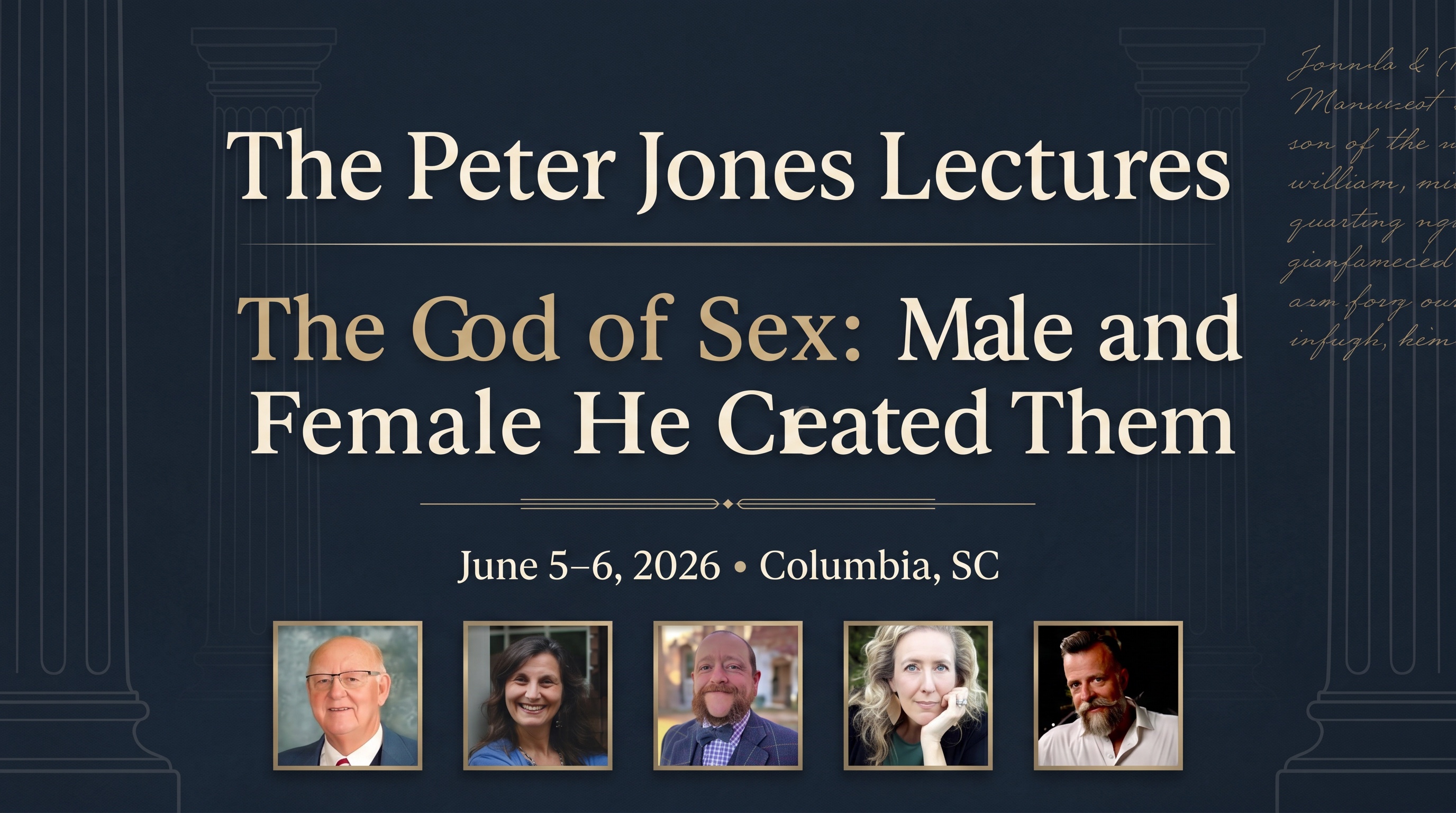
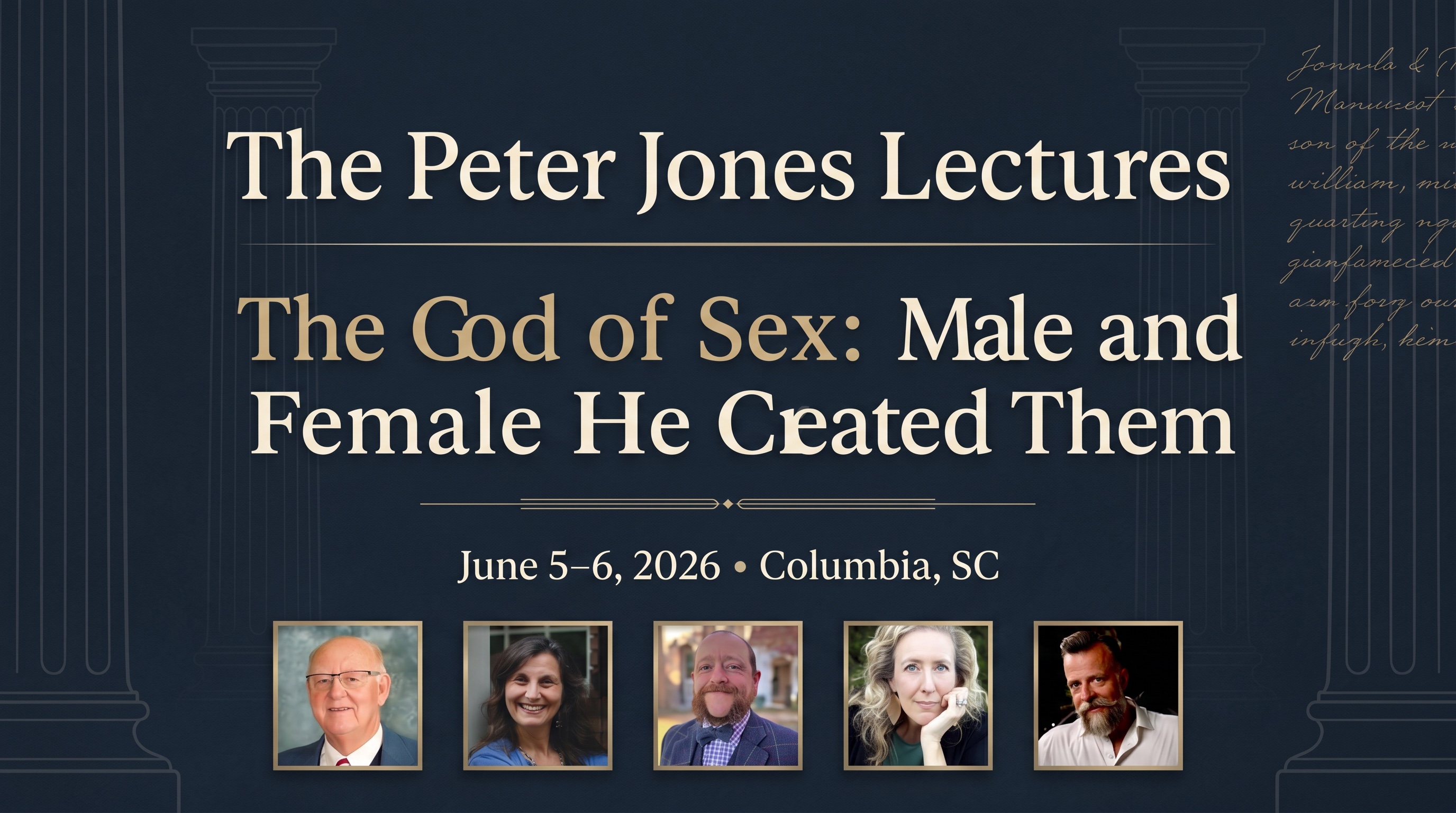
[00:00:03] Well, I'd better give you a title for this lecture because the one you read is rather vague.
[00:00:14] The text I have before me is Sexuality and Theology, A Clash of the binary and the Non Binary.
[00:00:26] Sexuality and Theology, A Clash of the binary and the non binary.
[00:00:34] And what I want to deal with in this lecture is how does sexuality define each individual person's deep personal identity?
[00:00:45] And how does sexuality relate to the theological heart of the God of the gospel?
[00:00:55] As we talk about homosexuality, I would suggest that we try to avoid any form of moralism.
[00:01:05] I don't know whether you hesitate when you speak to a homosexual, but, you know, just remind yourself that you are fallen as well.
[00:01:16] You are just as sinful in your own heart.
[00:01:20] And so since we're all made in God's image, we are all sinners as we've responded to God's work in us.
[00:01:32] And then, of course, as you speak to homosexuals in particular, it's probably good to make them understand that you're speaking about worldview, not individual sins as such.
[00:01:48] The Romans, the Book of Romans gives us a complete description when it says they exchanged the truth of God for a lie and worshiped and served the creature rather than the Creator who is blessed forever.
[00:02:04] That is a worldview that makes a fundamental distinction between God, who is the creator, and we, who are creatures.
[00:02:15] And that won't ever change.
[00:02:19] It's the fundamental notion between the binary, namely God and the creation, and the non binary, which people don't want to recognize. God the Creator. And so they'll say everything is one.
[00:02:36] So we use the term oneism as a way of making simple. This worldview of oneism and twoism and twoism is that there are two forms of existence, the God who creates and everything else which is created.
[00:02:56] So we have behind us, as we talk about sexuality, a deep worldview that people are sometimes happy to know.
[00:03:09] When you talk to an atheist, sometimes they're glad to hear you describe this fundamentally clear way of thinking about things. So try it out.
[00:03:20] Especially because the cosmology of paganism is an affirmation of a oneist view of everything.
[00:03:31] In the 60s, America was invaded by Hinduism.
[00:03:36] And as we see the influence of Hinduism, what is interesting is that there is a fundamental term in Hinduism which is advaita, advaita a D V a I T A.
[00:03:57] And it means not to. So all the talk that you hear about, oh, I'm a non binary or God is a binary, says Philip Tellarico. Well, he is actually God is distinct from us, but these terms are flowing from a Hindu term, advaita, and this refusal to see the distinction between God and creation, you will find all over the place in paganism. In ancient hermeticism, which is an ancient form of Gnosticism, you can read that the goal is to completely transcend duality. That ancient system called hermeticism had the same goal as people today do in eliminating to transcend duality.
[00:04:52] And of course, homosexuality is an expression, as Rosemary says in her book on the Five Lies, is a form of paganism and expresses the fact that there is no creator. The case of the American gay theologian makes this very clear.
[00:05:18] His testimony is a warning to us where this movement will take us. Being a gay man, he says, or lesbian, entails far more than sexual behavior alone. It entails a whole mode of being in the world. You see what he's saying, that you may be drawn into homosexuality or lesbianism, and you're not aware of it really. Or maybe you are, but you don't realize that what you're being drawn into is a worldview. And with this worldview, you have to describe God. And this man, Michael Clark, professor at the University of Emory, could not find in the Scripture a model for his chosen lifestyle.
[00:06:11] How interesting.
[00:06:12] He couldn't find it there.
[00:06:14] And so what he did was try to give himself a model that would help him.
[00:06:22] And he turned to the Verdacci, the American Indian homosexual shaman of pagan animism. So that's what's at stake with worldview.
[00:06:34] And you cannot avoid it, because we have to live with worldview. We are not foolish people.
[00:06:42] Our minds have to work on some kind of methodology.
[00:06:49] And according to the Apostle Paul, there are only two you either believe in God the Creator, or you don't. And everything is the same. And that was very interesting.
[00:07:00] When the Episcopalians ordained their first homosexual bishop, what they did was cite a text from a Rumi poet who, by the way, was also a pedophile, a poet called Rumi. I'm sorry, that's a form of oneism.
[00:07:22] The medieval Sufi master. And so they cited that in the celebration for the ordination of this first homosexual bishop. Many evangelicals don't go that far, but I think some of them get very confused about this issue.
[00:07:43] Ken Wilson, in the book A Letter to My Congregation, he says this. Maybe we are being asked by the Spirit to relax around gender distinctions a little. Isn't that subtle?
[00:07:58] Just a little. But we don't want to give gender distinctions too much importance. Of course, on a much more serious level, the Roman Catholic theologian Richard Rohe who is a contemplative, says gay people get non duality because it is in their DNA.
[00:08:21] So you cannot be a gay person without being a oneist. So I want to show how there is a deep spiritual ideology behind the practice of homosexuality, whether individual homosexualities, homosexuals, realize it or not.
[00:08:44] And the way to get perspective on this is to ask how homosexual homosexualism was looked at in the past, throughout ancient history. And you'll be interested to know that homosexuality is a common trope in the history of paganism throughout time and space. The clearest example of it in the ancient times comes from the 19th century BC Mesopotamian religion associated with the goddess Ishtar. We give her the dates of 1800 BC and these priests found themselves transformed by Ishtar from masculinity into femininity. And they functioned then as occult shamans. And their calling was to transgress boundaries. You see how twoism gets eliminated when you're called upon to transgress boundaries. Boundaries. No boundaries means no binaries. Of course. I got some of this information was from the renowned religion scholar Mircea Eliade, who calls this ancient spirituality ritualized androgynization.
[00:10:03] Ritualized androgynization.
[00:10:06] Androgyny is an appropriate term for pagan sexuality today, for it invokes the joining of distinctions between male and female. That's what androgyny means, the joining of andros and gune. And that androgyny includes, in our day, homosexuality, where two people, male or female, played the same roles really in different ways. And so they get to be androgynous in bisexuality, in transgenderism, where a person who is a male says he's a female, so he's living with an androgynous way of thinking.
[00:10:53] And transvestitism as well is another form of androgyny. We see this expression, though, in ancient Mesopotamia and Indo European nature religions. And you find it as well in the myths of Australian Aborigines, African tribes, South American Indians and Pacific Islanders.
[00:11:20] So nothing is new under the sun.
[00:11:22] Even though separated by many centuries, Eliade shows how an evident historical and theological connection between Mesopotamian homosexuality, shamans called Asinus, what the Canaanites called Kedeshim, what the Scythians called in Ares and the Syrians called Galli.
[00:11:46] And Augustine knew all about the Galli when he saw them proceeding in the outward expression of paganism in his day. Mircea, this theologian of religious history, believes that ultimately, and here's where it gets very interesting, it is the wish to recover a lost Unity. So you feel that what's wrong with you needs to be solved.
[00:12:18] And what this means is you get rid of the distinctions at the origin. So you have to rediscover the lost unity and opposites. And complete aspects of sexuality, unfortunately hide that original unity.
[00:12:43] That's why this kind of sexuality always has a religious meaning to it. Eliade explains the spiritual meaning of androgyny.
[00:12:54] Listen to this. A symbolic restoration of the undifferentiated unity that precedes the creation.
[00:13:05] You have to get beyond the creation, so you have to get beyond Romans 1:25.
[00:13:13] And once you've done that, then you discover that everything is unified.
[00:13:19] And then you can get on with your unified sexuality.
[00:13:25] But there is no Creator, you see, you've gotten rid of the creation. The androgynous being thus sums up the very goal of mystical oneness union, whether ancient or or modern. So Eliade again gives this definition. In mystical love and at death, one completely integrates the spirit world.
[00:13:50] All contraries are collapsed, the distinction between the sexes are erased. The two merge into an androgynous whole. Or again, according to Eliade, an archaic and universal formula exists for the expression of wholeness, the coexistence of the contraries.
[00:14:12] So you see in sexuality in time and space, there is always a fundamental spiritual meaning to what we do. The religious function of the homosexual priest shaman is to combine the two cosmology planes, earth and sky, God and creation. And they combine in their own persons, the feminine element of the sky and the masculine element of the earth the other way.
[00:14:49] Here we have ritual androgyny, a well known archaic formula for the joining of the opposites, non binary.
[00:14:59] Remember when you hear someone saying non binary today, that behind this kind of a phrase, whether they realize it or not, is this deep spiritual meaning that goes out along through time and space.
[00:15:18] Of course, this has moral implications.
[00:15:22] On the moral plane, the pagan monist assumes guiltless responsibility for all his actions, whether good or evil.
[00:15:32] So if you don't buy fundamental moral distinctions, then you can justify whatever you do.
[00:15:40] This relativizes the entire moral domain. Androgyny in its various forms eradicates then distinction and elevates the spiritual blending of all things, including the idolatrous confusion both of the human and the divine, both of good and evil. This seems to be the same logic that Paul brings to a similar conclusion already in Romans 1:18 through 27, where the denial of the creator creature distinction leads to the practice of what he calls unnatural sexuality.
[00:16:21] Binary are enormous.
[00:16:24] In its Hindu form, it is taking over much of the Western mind.
[00:16:30] Philip Goldberg declares that advaita and non dual oneness, unity around non separation are the generic terms increasingly used to describe the present and coming spirituality in America, meaning that God and the world are not 2. See how Hinduism and this term advaita completely destruct God's place as distinct from us. And that's why in recent decades, America has abandoned theism and embraces the spirituality of Eastern paganism with enormous effects. Because in the same years we have seen the most radical social engineering in American history.
[00:17:20] The deconstruction of normative biblical heterosexuality and the revival of homosexual androgyny. Homosexuality then, is the sacrament of oneism.
[00:17:38] A key player in the 60s revolution was Herbert Marcuse, who taught at UCSD, where my daughter teaches. I think of this every time she drives down from Escondido to San Diego by the name of Marcuse. Herbert Marcuse, a Marxist of the Frankfurt school. In his book Eros and Civilization, he believed that the fight for Eros is a political fight.
[00:18:09] The fight for eros, namely sexual activity, is a political issue.
[00:18:16] He sought the destruction, like the previous Marxists, of the traditional father and mother family.
[00:18:24] Another architect of this culture was the Jungian psychologist and gnostic spiritualist, June singer in her 1977 book Androgyny. It's interesting, this was already appearing in 77 Androgyny Towards a New Sexuality. She was seen as one of the speakers of the new spirituality as it was coming. And she understood the importance of affirming the significance of androgyny.
[00:18:59] Thus, of course, of homosexuality. She made a programmatic statement of this.
[00:19:05] What lies in store as we move towards the long for conjunction of the opposites is that human psyche realizes its own creative potential through building its own cosmology and supplying it. Ah, she gets this in supplying it with its own gods.
[00:19:25] See, once you affirm the androgyny of sexuality, you will end up with a God or two very different from the Bible. She is calling for a coherent, all encompassing, attractive and religiously pagan account of existence.
[00:19:47] This new paradigm fits perfectly with the witnesses paganism's past. Singer saw and affirmed that the spiritual age of Aquarius was also the age of androgyny. You remember hearing the age of Aquarius? Well, now she wants to add and the age of androgyny, the new humanism.
[00:20:10] She also understood its implications and declared, as I've already cited. But she goes on, we have at hand all the ingredients we will need to perform our own new alchemical opus. The Great work that is to fuse the opposites within us. She states, the archetype of androgyny appears in us as an innate sense of and witness to the primordial cosmic unity we have at hand, she says, all the ingredients we will need to perform our own new alchemical opus, the great work.
[00:20:54] Diffuse the opposites within us. She states, the archetype of androgyny appears in us as an innate sense of and witness to the primordial cosmic unity.
[00:21:08] Grand. Where do you find that?
[00:21:10] Well, in pagan religions, of course, that is the sacrament of monism, functioning to erase distinctions that was nearly totally expunged by the Judeo Christian tradition and a patriarchal God image. So here you see this modern form of the new spirituality which wants to include androgyny. Sexual androgyny has as its ultimate goal the ancient religion of the Bible.
[00:21:46] What she's getting rid of is the deeply important sense of cosmology, the androgyne.
[00:21:54] The human being, aware of being both male and female, participates consciously in the evolutionary process, as she says, redesigning the individual element in this new planet. She recognizes that a fundamental element in this new sexuality is its affirmation of monism, what we call oneism, as a radical rejection of the biblical God of the Western Christian past.
[00:22:26] Some of you have probably heard the term baphomet, which is an ancient satanic symbol of the divine.
[00:22:35] Baphomet is used now by modern pagans.
[00:22:40] And baphomet is a mix of goat and human, made popular in witchcraft by the famous occultist Aleister Crowley, who influenced the Beatles, by the way.
[00:22:55] And baphomet has both male and female genitals.
[00:23:00] So the androgynous expression of sexuality is essential to paganism.
[00:23:07] This new kind of spirituality, beyond binary thinking will bring a new synthesis between the intellect and the spirit to produce a great coming convergence of spirituality, science and sexuality.
[00:23:24] By. Well, that's what I want to give you in terms of the worldview of paganism and how it includes a practice of sexuality, which is what we need as Christians as we try to make sense to those we speak to as to where they are taking themselves.
[00:23:48] But now I want to move to the cosmology of biblical revelation.
[00:23:54] What does the Bible say in response to what we've just heard?
[00:24:00] We are facing the ultimate question today. What is Christian love?
[00:24:06] And what does a Christian confess?
[00:24:09] If same sex marriage is the sacrament of oneism?
[00:24:13] In Scripture, marriage is presented as the ultimate mystery of the gospel of twoism.
[00:24:21] If you read Ephesians 5,32 this mystery, says Paul, citing Genesis 1:26 7. God created man in his own image. In the image of God, he created him.
[00:24:38] Male and female, he created them.
[00:24:41] And there's a profound saying that refers to Christ and the church.
[00:24:46] So you see, this notion of sexuality not only determines how we think about God, it also determines how we think about redemption. Very interesting.
[00:24:58] When he was asked by religious leaders of his day, what is the first commandment, he responded without hesitation, hear, O Israel, the Lord our God, the Lord is one, and you shall love the Lord your God with all your heart and with all your soul and with all your mind and with all your strength. This is the second. You shall love your neighbor as yourself.
[00:25:22] There is no commandment greater than these.
[00:25:26] That was Jesus. Response.
[00:25:29] The love of God was the love of the Lord your God as the Creator. Jesus then establishes the Christian faith on the basis of this prayer.
[00:25:44] It's the famous Shema of the Old Testament.
[00:25:48] Jesus cites the word Shema.
[00:25:51] This is the Shema of the Old Testament prayer in Judaism.
[00:25:56] And Jesus makes this affirmation central to New Testament faith.
[00:26:02] With all the saints of the Old and New Testament, Jesus puts the love of God ahead of the natural or intuitive love of other people.
[00:26:12] Some people, some theologians, don't accept this.
[00:26:16] We don't often hear any more of Brian McLaren, but he takes the opposite view. He believes that we must put the love of the neighbor first, not the love of God first.
[00:26:30] Only through loving neighbors, says he, do we prepare our hearts to love God.
[00:26:35] You may wonder where reversing the order gets you. The answer is not difficult. MacLaren tells us that loving the neighbor first creates a God who must no longer be understood as a separate, omniscient, omnipresent, omnipotent creator and cosmic redeemer.
[00:26:57] Christianity must lose its monotheistic notions to embrace a grander, inclusive God who demonstrates solidarity for all. A new non monotheistic view of God so precious to Hindus and pagans of all stripes.
[00:27:16] That's where you end up, dear friends, if you don't stick with Jesus definition of this text and you go with the liberal definition of today.
[00:27:26] Jesus knew that that would happen before answering the questions about how we love our neighbors.
[00:27:33] With the risk of falling into paganism like Brian McLaren, Christians must first ask what it means to love and worship God. And we learn that in the Scripture, in that we must worship God as the Creator and and redeemer.
[00:27:53] Romans 1:20 says, for his invisible attributes, namely his eternal power and divine nature, have been clearly perceived ever since the creation of the world.
[00:28:07] So you see, Paul is emphasizing God the Creator as essential to our understanding of who God is.
[00:28:18] But Scripture tells us even more specifically what the love of God is and how this teaching effectively affects the love we show to suffering neighbors, especially those in sexual confusion.
[00:28:37] We love God because He is first.
[00:28:42] This statement might sound abstract, but it expresses some really good Christian news is where everything starts.
[00:28:52] Revelation 4:11 says, worthy are you our Lord and God to receive glory and honor and power. For you created all things and by your will they existed and were created.
[00:29:10] We must love God because He stands outside of us, stands first in existence and precedes us as a loving creator.
[00:29:23] Long before there was any neighbor to love, God was expressing perfect love because the Scripture says God is love.
[00:29:35] God is prior to and the source of everything created.
[00:29:40] The standard of orthodoxy for Christians must start with the love and worship of our Creator, who made everything according to his great wisdom.
[00:29:52] Second, we love God because He is holy.
[00:29:55] When we say that God's being is holy, we are seeing that he is different in his being from everything else.
[00:30:05] This God who is different reveals himself to Moses with the name Yahweh.
[00:30:12] This name means I am who I am.
[00:30:16] Here God explains himself as self existent. Depending reassuring.
[00:30:24] Today, many claim the right and the power to self defined, especially in terms of their sexuality. But you have to wonder where this experimentation will end.
[00:30:36] God is the only being who self defines.
[00:30:40] And we love God because He's Trinity. So we love God because He's first.
[00:30:45] We love God because He self defines.
[00:30:48] We love God because He is Trinity.
[00:30:52] The Trinity is one of the most ignored but important truths of biblical revelation.
[00:31:01] Though it is complicated, the ancient Athanasian creed states that whoever will be saved must hold the faith of the universal Church, that we worship one God in Trinity.
[00:31:18] So the ancient church wanted us not to lose the notion of Trinity.
[00:31:24] Whereas the liberal bishop John Shelby Spong says there's not much value in the doctrine of the Trinity.
[00:31:33] And of course, both in Judaism and in Islam, there is no Trinity.
[00:31:41] Many evangelicals don't see its importance. But in spite of the difficulty of expressing it, we need to know that there is profound significance in the trinitarian nature of God.
[00:31:56] The Trinity is the very source of love by which we can love our neighbors.
[00:32:04] God did not become loving by creating the world.
[00:32:10] In fact, as eternal Trinity, he is the loving Father of the Son and the Spirit and from all eternity.
[00:32:18] So his actually creating of the world doesn't add much to him.
[00:32:23] If God were just one eternal divine Being a singularity like Allah, then His love of Himself would be both impersonal and narcissistic.
[00:32:36] And that's what you get if you have a God who is not trinitarian.
[00:32:42] Moreover, his eventual love of another, namely the creation, would not be central to his eternal essence, indeed an essential attribute.
[00:32:55] His person would depend upon created things and he would become a oneist.
[00:33:02] So God cannot depend upon his creating us to give Himself love.
[00:33:10] God is in essence, love.
[00:33:14] The very notion of true love, so naively employed by many church people to justify the inclusion of homosexuality in the church, is the love that we do not invent, the love that is essential to the transcendent being of the Trinity.
[00:33:32] So please, dear ones, don't get rid of the doctrine of the Trinity.
[00:33:37] It is essential to what we believe about God, who is the source of love.
[00:33:44] And he doesn't depend upon us to be a lover.
[00:33:49] Fortunately, he does love us and he creates us.
[00:33:53] But his essence doesn't depend upon this.
[00:33:58] It is the love within the Trinity that is at the origin of all human love.
[00:34:04] It surely goes without saying that all human love must reflect the original love of God's being.
[00:34:11] We also love God by respecting the holy character of the Trinity. He made God, who is prior and distinct from us creatures, when he creates, expresses who he is in the things he makes.
[00:34:29] The God who comprehends both separateness and complementarity, unity and diversity within his trinitarian being, creates things to reflect who he is.
[00:34:40] Things that are both distinct and yet beautifully designed relationships with other created things.
[00:34:49] This, remember, is the meaning of holiness.
[00:34:52] Distinct things functioning in their rightful places.
[00:34:56] So God separates day from night, sea and dry land, setting them in their proper places.
[00:35:03] He creates different kinds and gives them specific individual names and calls everything very good.
[00:35:11] So God in His manner of creating, you see, has a goal in affirming who he is and how we should look at the way God creates, has made the world.
[00:35:23] To create is to separate.
[00:35:27] And that's the one thing that non binary people don't want.
[00:35:32] They don't want separation. They want everything joined together.
[00:35:36] Twoism, or the principle of difference, or the binary is the key to the cosmos. You must use this whenever you talk about the gospel. Also, we love God by preserving the heterosexual holy image that he gave us.
[00:35:53] Holiness or twoism is reflected in heterosexuality.
[00:36:01] Hetero in Greek means other or different, and Scripture states this programmatically.
[00:36:10] God said, let us make man in our own image after our likeness.
[00:36:16] How do we reflect God's holy image in the earth? And thus show love to God as image bearers of God's holy identity. We show our love for God by seeking to reflect his holiness in our humanity, in distinctions.
[00:36:35] Our creation in God's image is the reason for our unique human dignity.
[00:36:42] We reflect human form elements, human form elements of God's personhood.
[00:36:49] But there is more to say about God's image. So God created man in his own image. In the image of God, he created him male and female. He created them. I cite this text because it tells us that we are called upon to carry the image of God in ourselves.
[00:37:12] And in particular, as the text says, as God created the image of God, he created him male and female.
[00:37:22] That is essential to how we witness to God in the world.
[00:37:28] It's the emphasis, as you see, in the being of God, the principle of unity and otherness.
[00:37:41] That's who God is in and of Himself.
[00:37:45] It's the principle of unity. The three persons are unified and yet they're distinct.
[00:37:52] And he creates us with that sense of his own image.
[00:37:58] So how can we live in this world reflecting his image if we don't express both unity and distinction?
[00:38:12] God could have created a thousand males for Adam, but He created one woman.
[00:38:19] And I'm so glad he gave me one woman too.
[00:38:22] I don't need any more.
[00:38:30] Only a woman, not another man or thousands of men, could complete the divine design for humankind in reflecting God's trinitarian image. Do you see that?
[00:38:46] So if you say to yourself, oh, let's not bother with these issues of homosexuality and all that kind of stuff, let's not really talk about it, or when we talk about it, let's not bother to talk about it in any particular way, then I will just remind you as Christians, you are created to reflect God's image of Trinity sameness and distinction. And that's how you do it in your relationship to the opposite sex.
[00:39:24] The Apostle Paul, under the inspiration of the Scripture, says that we live with the notion of the Trinity.
[00:39:35] In First Corinthians 11:3, he states, Just as the husband is the loving head of his wife in a God honoring marriage, so in the dynamism of the distinct personal relationships with the mystery of the Trinity, the head of Christ is God.
[00:39:54] You see there that he's making the Trinity the essential way that we understand the Lord God the Father is the loving head of Christ the Son, just as a husband is the loving head of the wife.
[00:40:11] So when Scripture states that God made human beings male and female in his image, his images of Trinity is what is meant.
[00:40:22] This is the revelation of his inner being within the life of the Trinity.
[00:40:28] Distinction and unity.
[00:40:31] This is why, says Paul, homosexuality is unnatural in Romans 1:26 because of the fall, it is out of order.
[00:40:43] It is not good that man should be alone, because without the woman, the human race would not be created and would not reflect the being of God.
[00:40:55] Homosexuality is both a misuse of the natural world as God made it, and by consequence becomes a rejection of God, the moral judge and intelligent creator of the universe.
[00:41:10] If the ultimate dignity of men and women is to reflect the person of God, then in this sense homosexuality is a denial of the Trinity and inevitably becomes a symbol of another expression of divinity.
[00:41:27] Nature as God, the expression of a creator. Denier all is one non binary pagan pantheism.
[00:41:38] If you only affirm homosexuality, you're affirming a kind of God who fits with pagan thinking. In heterosexuality, we honor the mystery of God as Redeemer. In heterosexuality, God also is revealed as Redeemer. In Matthew 19:45, 40 following, Jesus knows and embraces the institution of marriage. In Genesis 1:24.
[00:42:08] Paul also appeals twice to Genesis 2:24, once in 1st Corinthians 6 and once in Ephesians 5:31,32, where he speaks of the profound mystery contained in this Old Testament text. You see, when Paul talks about profound mystery, he's not fooling around.
[00:42:29] He means this is absolutely essential for you to know and to express because it prophesies Christ's love for the church. We learn that already in the Old Testament, God begins to reveal a mystery about him. See ancient text of Genesis 2:24.
[00:42:46] But it is deeply hidden there.
[00:42:49] Genesis 2:24 is a mysterious text, and yet it has this meaning.
[00:42:56] And Paul says that he is called to bring to light to everyone. What is the plan of the mystery for the ages in God who created all things?
[00:43:08] Ephesians 3:9.
[00:43:10] Paul believes he's entrusted with the mystery of God who created all things to reveal what the Creator was doing and who the Creator really is.
[00:43:22] Sexual androgyny is the sacrament of pagan oneism.
[00:43:27] This is the great mystery of the cosmos. In Genesis, it's the mystery of the cosmos.
[00:43:35] Luther said this. The cross alone is our theology, for it is immanuel God Himself hanging on the cross for us who are distinct from Him. This disarming truth reveals that already at the beginning, God, the Creator, distinct from his creation, reveals Himself in the institution of marriage as lover of the other.
[00:44:01] The creation was totally distinct from Himself, really.
[00:44:05] And yet God put this into creation and gave it to us as a mystery that we must understand and live.
[00:44:16] How can it be said of God? Just as a husband loves his wife, and as a bridegroom rejoices in his bride, so your God rejoices in you.
[00:44:27] Isaiah 62:5.
[00:44:30] So this emphasis of male and female continues on in the Old Testament.
[00:44:36] Robert Genyong says every narrative, law, proverb, exhortation, poetry and metaphor in the pages of Old Testament scripture that has anything to do with sexual relationships presupposes a male female prerequisite for sexual relationships and marriage. The author of this heterosexual truest universe is God, the Creator.
[00:45:03] Christians must affirm this with confidence, for what can be known about God is plain to them because God has shown it to them.
[00:45:13] Homosexual hides the being of God from creatures who need to see him as a trinitarian loving God. In unity and distinction, divine revelation shows both God's authority and his fatherly, selfless love.
[00:45:33] God's love for his people, his love of creatures other than Himself. You see, that's the point. It's other than Himself. Love is not limited to marriage, but the intimacy of heterosexual marital love is the love used in Scripture to show us the distinction, the union of the aspect of divine trinitarian love.
[00:45:58] That's the one flesh union which is set apart in Scripture.
[00:46:04] A man engaging in sex with another man cannot express the otherness of married union.
[00:46:12] Nor can this unnatural couple have true one flesh union.
[00:46:17] So I suggest to you that this is of great importance. Ultimately, sexuality is closely linked to spirituality.
[00:46:27] I'll say that again.
[00:46:29] Sexuality is closely linked to spirituality. In the creation of human sexuality, God reveals Himself as both different from us, yet ultimately related to us. In revealing Himself, he defines Himself.
[00:46:48] Our great cosmic task as humans is faithfully to carry his image throughout our lives and to bear witness to it in the world in particular through sexuality.
[00:47:02] This is part of how we love God, how we respect Him.
[00:47:07] I'm always amazed that the Supreme Court's declaration of same sex marriage happened because it is a shattering of this divine truth. Jesus, the faithful celibate male, comes to reveal the ultimate redemptive meaning of marriage as it will be fulfilled in the cosmic reconciliation between the heavenly groom and his bride, the Church. I want to conclude now. How am I doing, Mary? I have no idea at the time. I don't see any watches or clocks. So this is good.
[00:47:46] A culture that has eliminated God. The loving Creator has cut itself off from true love.
[00:47:54] If God is the all wise Creator who made us both for his glory and our good for creatures, this unique message given to the church is what we offer to the lost world.
[00:48:08] The awe of being made in God's image for which Charlie Kirk paid the ultimate price for is what we must be willing to bear ourselves. I don't wish any of you anything that happened to Charlie Kirk but he is a modern day sufferer and he gives us the way we love our neighbors by passionately preaching the great cosmic love story of the Creator dying on the cross for the sins of his creation. There is no greater love than this. We speak the clarity and power of the Gospel in this fallen world without which people have no hope of genuine everlasting love. We must also passionately bring this good news by living out this love with sensitivity with our courage to gender confused people who are searching for real love. May the Lord grant His Church courage and loving gospel clarity as she engages in faithful courageous teaching and living to reflect in our sexuality the love of the being of God, Creator and Redeemer.
[00:49:26] Amen.